Hello!

We believe that support begins with understanding.

That is exactly why we created this platform with educational materials for everyone who wants to know more about the LGBTQI+ community.

Here you will understand how we can be supported in everyday life: at work, at school, in a conversation with friends, parents, or even neighbors. What coming out is and why not all LGBTQI+ people are able to do it. How to recognize homophobia in daily life. Why “jokes” can hurt. And what it means to “vote” for equality not only in a private conversation, but in society as well.

The materials here are not lectures, but rather a conversation. They were created to help you understand others and, we hope, to see people you already know in a new way.

Writing and speaking about LGBTQI+ people ethically is not about some “special” language at all. It is about simple yet important things: humanity, respect, and understanding. We are often afraid of saying something wrong — and so we stay silent. Or the other way around — we think we are speaking neutrally, but our words can hurt. We created this material to make it easier to find the words. And so that silence is no longer needed.

Campaign videos

Against homophobia

Against homophobia

We do care

We do care

Ally

Ally

What isLGBTQI+

LGBTQI+, LGBTQI+, or LGBTQI+ is not just a set of letters.

It is a shared name for different sexual orientations, gender identities, and forms of self-expression that still often face discrimination. Every letter is a community of people with its own history and struggle:

  • lesbianswomen who feel sexual, romantic, or emotional attraction to other women;
  • gay menmen who feel sexual, romantic, or emotional attraction to other men;
  • bisexual people — those who feel attraction to people of more than one sex or gender;
  • transgender people — those whose gender identity does not match the sex assigned to them at birth;
  • intersex people — people with innate variations of sex characteristics;
  • queer — covers all the other variations of sexuality and gender identity that go beyond heterosexuality and being cisgender.

And the + sign means openness. It includes other identities that did not make it into the acronym but are part of the community. For example — asexual, pansexual, and demisexual people.

The LGBTQI+ community brings together people who face discrimination because of their sexual orientation or gender identity. And simply using this acronym is already an important step in the struggle for the rights and the recognition of a great many different people.

Important terms

  • The absence of sexual attraction to any people.

    This does not mean that asexual people cannot have relationships, love, or start a family — sex is simply not an important or desired part of life for them. Asexuality is one of the variations of human sexuality. And, like all the others, it is normal.

Honest conversations

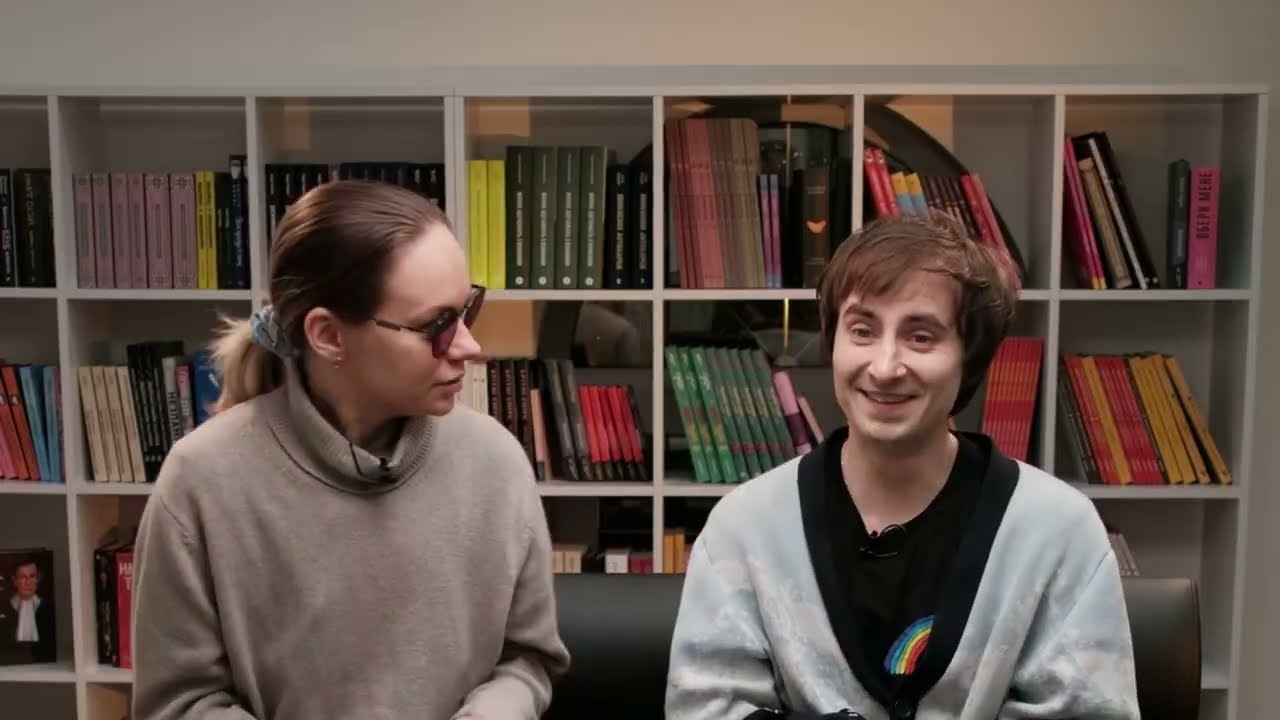
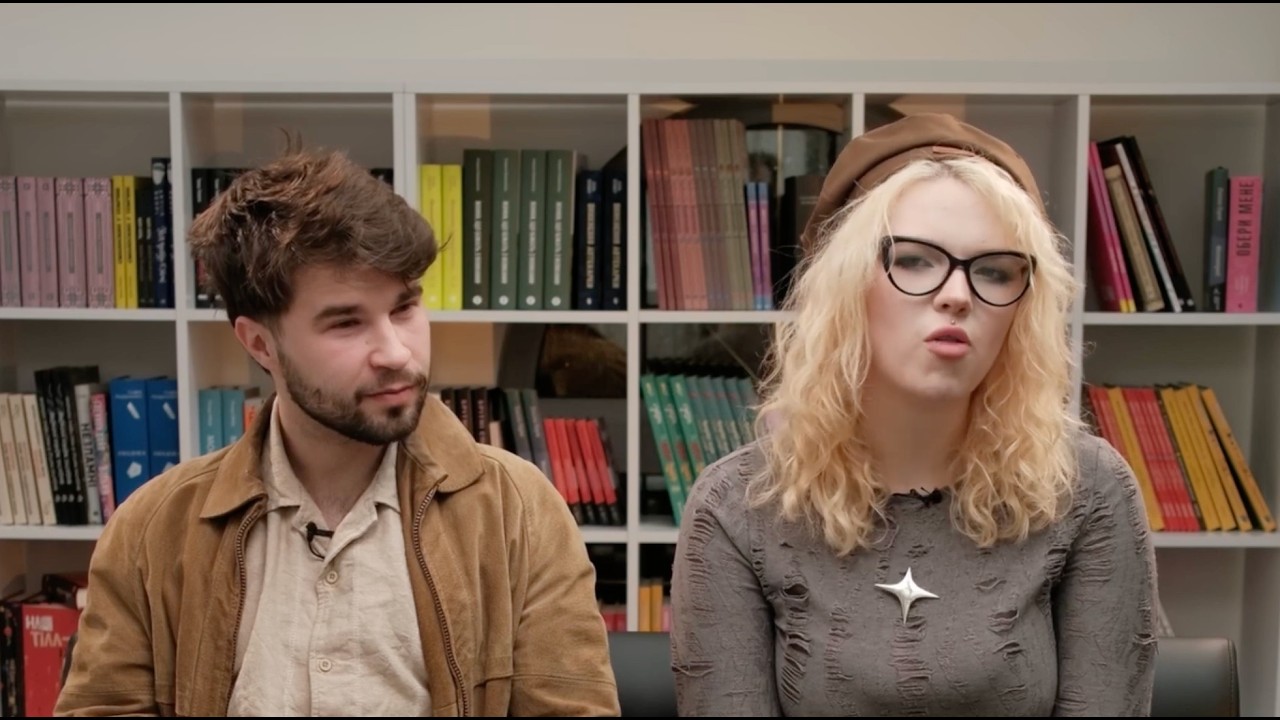
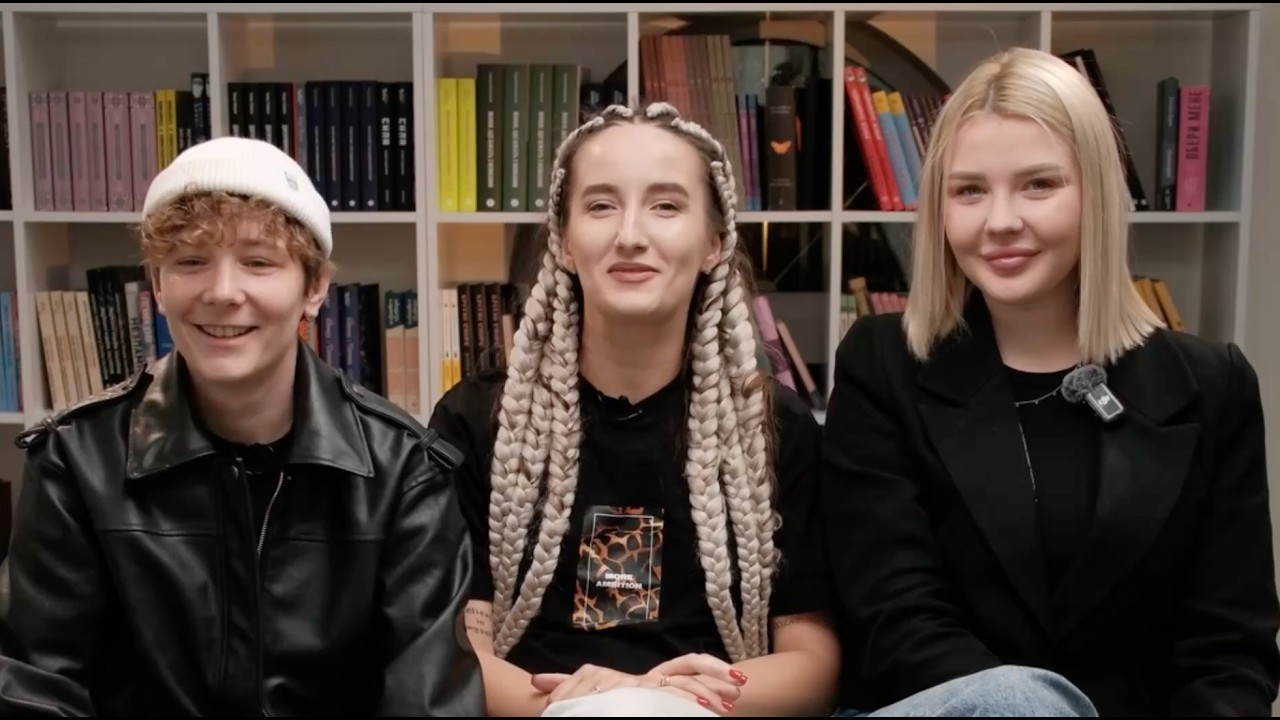
Sofiia and Tania

Viktoriia and Zhdania

Mariia and Katria

Ania and Yen

I shared a desk with you at school — and let you copy my physics homework.
Every morning I make your coffee at your favorite café.
I helped clean the whole floor when everyone else pretended they had not heard.
I am the one you sent your last thousand to for military gear — simply because you trust me.
I held the door for you when you rushed in with a hot cup in your hand.
You lent me your charger on the train.
We stood in the same line at the supermarket.
I sent you a meme, and you posted it.
You still do not know everything about me. I want to trust you, but I always hesitate — can I?
I am a lesbian. I am gay. I am a transgender person.
I am the same person I was yesterday. It is just that today I am saying more, because I trust you.
We see each other every day — in the same office, on the same floor at home, in the same barracks.
I know that you see me through my actions and my deeds.
We are not strangers, and still I keep hesitating about whether I can speak with you openly.
It matters to me to know that I can count on your support just as you can count on mine.
I want to share news with you in the same way — about my dates, family celebrations, and vacations with the person I love.
And also — to know that you are on my side. That you will not stay silent when someone insults me. That you will not walk past, pretending you do not know me.
I am the same person I was yesterday. Nothing has changed.
We have already met. It is time to know more.

What we say / what we do not

  • Correct: a homosexual person, a homosexual man, a homosexual woman.

    Incorrect: a homosexual (as a noun).

    Using “homosexual” as a noun comes from the medical terminology of the 19th and 20th centuries, when homosexuality was considered a mental disorder. This word carries an undertone of illness, deviance, or abnormality, even though the World Health Organization removed homosexuality from the list of psychiatric diagnoses back in 1990.

Time to know more

SOGI myths

SOGI myths

For a long time, diverse expressions of sexuality and gender — such as homosexuality, bisexuality and being transgender — were condemned by society and, accordingly, passed over in silence. As a result, a shortage of information about these phenomena arose, and it was sometimes filled in with stereotypes and myths far…

What rights do LGBTQI+ people still lack?

What Rights Do LGBTIQ+ People Still Lack?

What rights do LGBTQI+ people still lack? The question of why LGBTQI+ people demand anything for themselves, of what it is they still lack, comes up in the public conversation from time to time. Sometimes it comes with accusations — supposedly they already have every right there is, and now they want some special ones…

Inappropriate questions to LGBTQI+ people

Inappropriate questions to LGBTQI+ people

Inappropriate questions to LGBTQI+ people When we talk about respect, we often mean things like equal rights, access to services, freedom of self-expression. But respect begins with the small things: with how we treat one another in everyday life, which words we choose, which questions we ask. LGBTQI+ people, like…

How to talk about transgender identity with the older generation

How to talk about transgender identity with the older generation

When it comes to coming out to the older generation, it can be a difficult and emotionally demanding process. Parents, grandmothers, grandfathers, or other relatives may hold ideas rooted in traditional or outdated views of sexual and gender identity. Yet it is important to remember that coming out is not only about…

How to respond to a coming out

How to respond to a coming out

How to respond to a coming out A GUIDE FOR FAMILY AND FRIENDS Which questions you can ask, which phrases to avoid, and how to support the person and yourself — explained by the psychological service of Insight NGO. Coming out is the situation in which a person stops hiding their own sexual orientation or gender…

How to talk to your child about homophobia

How to talk with a child about homophobia

Homophobia is a set of stereotypes and prejudices about homosexual people, reinforced by an emotional charge: fear, hostility, shame, hatred. It shows up both in judgments and in behavior, from avoidance to open displays of aggression. Spending every day in a school environment that broadcasts homophobia as the norm…

Bullying based on sexual orientation and gender identity: a guide for parents, teachers, and school psychologists

Bullying based on sexual orientation and gender identity: a guide for parents, teachers and school psychologists

Bullying is not just a quarrel or an insult. It is constant, deliberate abuse that has a very powerful effect on a child. In a child who is bullied all the time, the psyche changes: anxiety, fear and a sense of guilt set in. These consequences can stay with a person for many years and can even require treatment…

How to protect yourself online: a cybersecurity guide

How to Protect Yourself Online: A Cybersecurity Guide

Online activism often comes with hater attacks on social media, constant attempts by malicious actors to get into your accounts, and leaks of personal data. What to do when trolls attack? How to protect your accounts and personal data? How to recognize phishing messages? How to file a report with the cyber police? How…

Gender transition in Ukraine: (non-)compliance with human rights standards

Gender transition in Ukraine: (non-)compliance with human rights standards

Introduction 2016 became a landmark year for transgender people in Ukraine, because that was the year when the regulatory framework governing the transition procedure in general and, in particular, legal gender recognition – that is, obtaining personal documents in which the name and gender marker correspond to the…

Project team

Authors: Inna Iryskina, Mykyta Karimov
Copywriters: Yulia Solokha, Nata Shepeta
Design and layout: Olha Lebedieva
Design and illustrations: Oleksandra Spasova, Oleksandr Bosov
Filming and editing: Andrii Hordiiev
SMM: Oleh Nebelchuk
Communications strategist: Yulia Solokha
Communications manager: Nata Shepeta

The project “A Network for Democracy: building the future with the European leaders of tomorrow” is implemented by the NGO “STAN” and ActionAid in partnership with the NGO “Center for Social Transformations TENET”, Insight NGO, and the NGO “Chernivtsi Association Zakhyst” with the support of the Ministry of Foreign Affairs of Denmark. This project is part of the program “Young Ambassadors of Diversity”.

This is a program for young people and youth workers that strengthens social cohesion in order to build an inclusive, peaceful society, to minimize the likelihood of conflicts arising between different groups, and to speed up the integration of young internally displaced people. The program is implemented by the NGO “STAN” in partnership with ActionAid, an alliance for rights, equality, and international solidarity, with the support of the Disasters Emergency Committee (DEC), Global Fund for Children (USA), Terre Des Hommes (Germany), and IM Swedish Development Partner (Sweden).

Any opinions set out in this publication belong to Insight NGO and do not necessarily reflect the views of ActionAid and/or the government of Denmark.

Insight AI
Hi! I'm the virtual assistant of the NGO Insight. This is a safe, non-judgmental space to ask about our support: psychological, legal, and social help, our community and events, and human rights. Tell me what you're looking for — and I'll point you in the right direction or help you get in touch with our team.

By continuing to work with the AI ​​assistant, I agree to the terms of use of the site and the privacy policy.

AI assistant may make mistakes in responses