

Transgender families

Marriages, parenthood, and trans children: legislation around the world, research, and recommendations for Ukraine
Author — Inna Iryskina, transgender program coordinator at Insight NGO
Introduction and status categories
In the discourse around LGBTQI+ people, the “family question” has always been and remains one of the key ones. Indeed, achieving marriage equality — that is, the possibility of entering into marriage and obtaining within it the same rights that heterosexual couples have — is often the main goal of LGBTQI+ movements, one whose achievement is sometimes equated with achieving equality as such.
For the most part, however, this discourse – on the part of both supporters and opponents of equality – focuses by default on cisgender LGBTQI+ people.
Transgender people, along with their needs and problems in the family context, often fall outside this focus and end up in a kind of blind spot. So when questions of family rights reach the level of the political agenda, only isolated voices can be heard in it with regard to trans people.
On the one hand, since the concept of sexual orientation as such is built around relationships, it is hardly surprising that pressing needs to regulate those relationships follow from it. On the other hand, the fact that any sexual orientation can be combined with any gender identity and transgender status, which adds its own specific features, also cannot be denied or dismissed. And when people do begin to speak about such features, this sometimes provokes reactions in society no less controversial than the question of homosexual relationships. One example is the recent attempt to remove from Ukrainian legislation the ban on the adoption of children by people who have medical diagnoses related to being transgender, which has so far not succeeded.
Any family in which at least one person is transgender
This text is devoted specifically to transgender families, in order to examine their current situation in various countries of the world and to make the voices of people from the trans community itself louder.
Types of trans family statuses
Each of these statuses is covered in a separate detailed section
Marital status. When a trans person is in a stable relationship with another person – in this perspective the key issue is the legal recognition of such a family union as a marriage or a partnership
Parental status. When a trans person, usually in a relationship with another person, has or wants to have children – here questions may arise both about reproductive rights and possibilities and about raising a child
Child status. When it is a child in the family who is transgender – here the questions of the needs and possibilities of transition for such a child and, in general, of their socialization come to the fore
Let us examine how the questions outlined are currently regulated by the legislation of different countries and what the positions of international institutions are. What reservations arise in society, how trans people themselves identify their needs – and, ultimately, what the ways of solving the existing problems might be in order to achieve genuine equality of rights
Marriages
The key aspect that gives rise to specific questions about family unions involving trans people is gender transition. Legal gender recognition means changing the gender marker, that is, the “passport sex,” in a person’s identity documents.
And this, as a rule, means that if the person is married at the moment of recognition, their marriage is legally transformed from a different-sex one into a same-sex one (or vice versa). And where the recognition of non-binary identities is also possible, such marriages fall outside binary definitions altogether.

Jake and Hannah Graf, a trans family
Of course, in countries where full marriage equality has already been achieved – and by “full” we mean equality in which same-sex marriages are not merely equalized in rights with different-sex ones, but the definition of marriage as such is gender-neutral – this should not cause any additional complications.
It is another matter where the right to marry is limited to a certain extent, or is allowed only between “a man and a woman.”
Let us look at this in more detail.
Types of legislative regulation
The legislation of different countries that directly or indirectly regulates marriages involving transgender people can be classified according to various criteria, for example:
- By the presence of separate legislative provisions relating specifically to trans people and marriages, or their absence, when these matters are regulated on general grounds. “General grounds,” however, leave room for ambiguous and subjective interpretations in countries where there is no full marriage equality, which will be discussed further below
- Depending on whether the legislation allows trans people to enter into and preserve marriages freely, or restricts them in this in one way or another.
- By how the possibility for trans people to enter into marriage and the possibility of remaining in a previously concluded marriage after legal gender recognition are regulated.
- By how marital rights were won – whether transgender people resorted to separate efforts for this, or whether it happened, for example, in the general course of the struggle for marriage for LGBTQI+ people.
Trans marriages and same-sex marriages
At the time of writing, 28 countries in the world recognize same-sex marriage across all or most of their territory. At first glance it may seem obvious that such recognition should automatically mean recognition of marriages for trans people as well. Yet this is not always so: if a country’s legislation has separate provisions concerning trans people, then those provisions have to be revised separately.
And if, for example, in Ireland, after same-sex marriage was approved by referendum in 2015, the gender recognition law that was being prepared for adoption at that very time immediately took into account that there should be no divorce requirement, in some countries these processes sometimes took years.
The United Kingdom
In 2004, civil partnerships were introduced by law, but transgender people were required to divorce in order to obtain legal recognition, and only afterwards could they, if they wished, formalize their relationship again as a partnership. In 2013, in England and Wales, the divorce requirement was abolished with the introduction of same-sex marriage, but a spousal veto appeared, which can be imposed by one spouse on the other spouse’s obtaining legal gender recognition. In this way, the right to marry and the right to recognition of one’s identity remain partly dependent on each other. In Scotland, where same-sex marriage was introduced in 2014, there is no such requirement.
Portugal
Same-sex marriage has been allowed since June 2010, and the law that regulated legal gender recognition came into force in March 2011. Before that, a precondition for recognition was surgical sterilization, and for that, in turn, not being married.
Australia
In Australia, the legislation that allowed same-sex marriage came into force in December 2017, but for another year after that the requirement to divorce before obtaining legal gender recognition remained in effect at the national level – although some states had abolished it earlier.
There are also the opposite examples – when transgender people fought for the possibility of preserving a marriage that became a same-sex one after legal gender recognition, despite the fact that entering into such marriages was not allowed in the country at that time.
Austria
In 2006, the High Constitutional Court of Austria ruled that the requirement under which only unmarried persons could change the entry in the register of births, deaths and marriages, and thereby obtain legal recognition, had no legal basis. Under the court’s decision, this requirement was removed from the legislation, and soon afterwards Angelika Frassl became the first trans woman in Austria to be officially in a same-sex marriage with her wife. At the same time, same-sex partnerships were introduced in Austria only in 2010, and marriages in 2019
Germany
In Germany, in 2008 the Constitutional Court held that it was unfair to demand a choice between two fundamental rights – to personal self-determination and to marriage. As a result, the requirement not to be married was removed from the “Transsexuals Act,” which regulated the procedure of trans transition. Same-sex partnerships were already recognized in Germany at that time, whereas marriage was allowed only in 2017.
Uruguay
In Uruguay, a law on legal gender recognition was first introduced in 2009. Although at that time only same-sex partnerships, but not marriages, were recognized in the country, this law contained no restrictions for married trans people – it only mentioned that it did not affect general marriage legislation, a note added in order to reassure conservatives. In any case, since 2013 same-sex marriage has been allowed in Uruguay in full.
France
In 2012, in France, a married couple went to court after a trans woman was refused legal recognition of her gender because she was married. The Court of Appeal decided that, since the marriage had initially been concluded between a man and a woman, it remained valid, and since the transition procedure had been carried out in a lawful way, legal gender recognition should also be allowed. However, the court did not permit changes to the marriage certificate or to the children’s birth certificates. From 2013, the recognition of same-sex marriage in France removed such questions.
Taiwan
An interesting case occurred in Taiwan, where in 2012 two trans women married, one of whom had already obtained legal gender recognition by that time while the other had not – so legally this was a marriage of “a man and a woman.” The following year the other one also obtained recognition, after which they were sent a notice from the government about the annulment of their marriage. Soon, however, after consulting colleagues and experts, Taiwan’s Minister of the Interior announced that the government respected the couple’s rights and would not demand the dissolution of the marriage. At the same time, same-sex marriage was recognized in the country only in 2019.
The United States
In the United States, legislation on legal gender recognition varies considerably from state to state. However, even before the 2015 court ruling that allowed same-sex marriage across the whole country, according to the statement of the American “Transgender Law Center” there is no known case of trans people being required to divorce in order to obtain recognition. At the same time, interestingly, there were problematic cases with marriages concluded after recognition, but that will be discussed separately.
Australia
We mentioned Australia in the list of countries where legislation on trans marriages lagged behind same-sex marriage, but in individual states, on the contrary, it ran ahead. This concerns the Australian Capital Territory and South Australia, where the divorce requirement for legal gender recognition was abolished in 2014 and 2016 respectively.
Finland
Let us separately mention Finland – as a case with a negative outcome, unlike those cited above. Since 2002 the “Act on Legal Recognition of the Gender of Transsexuals” has been in force there, and since the same year, civil partnerships. Accordingly, when the gender of married persons was recognized, this law allowed their marriages to be converted into partnerships.
In 2012, however, the European Court of Human Rights (ECtHR) received a complaint from a trans woman who wanted to preserve her marriage as such. Having examined the case, in 2014 the court concluded that there was no violation of rights in this situation, since a partnership grants spouses “almost the same” rights as marriage.
Since 2017, same-sex marriage has been in force in Finland, after which the problem was effectively removed. However, the case created a precedent in view of which the courts and state institutions of other countries in which same-sex partnerships, but not marriages, are currently recognized may also refuse trans people’s wish not to dissolve their marriage.
Trans marriages in the absence of same-sex ones
If we now turn to those countries where same-sex marriage is not recognized, they can be divided into two categories:
- countries that have restrictive provisions in their legislation – as a rule, provisions that directly impose a requirement not to be married in order to obtain legal gender recognition;
- countries that have no clear legislative regulation of marriage for trans people – because this aspect is absent from the regulatory provisions on legal gender recognition, or because there is no clear regulation of the recognition process as such.
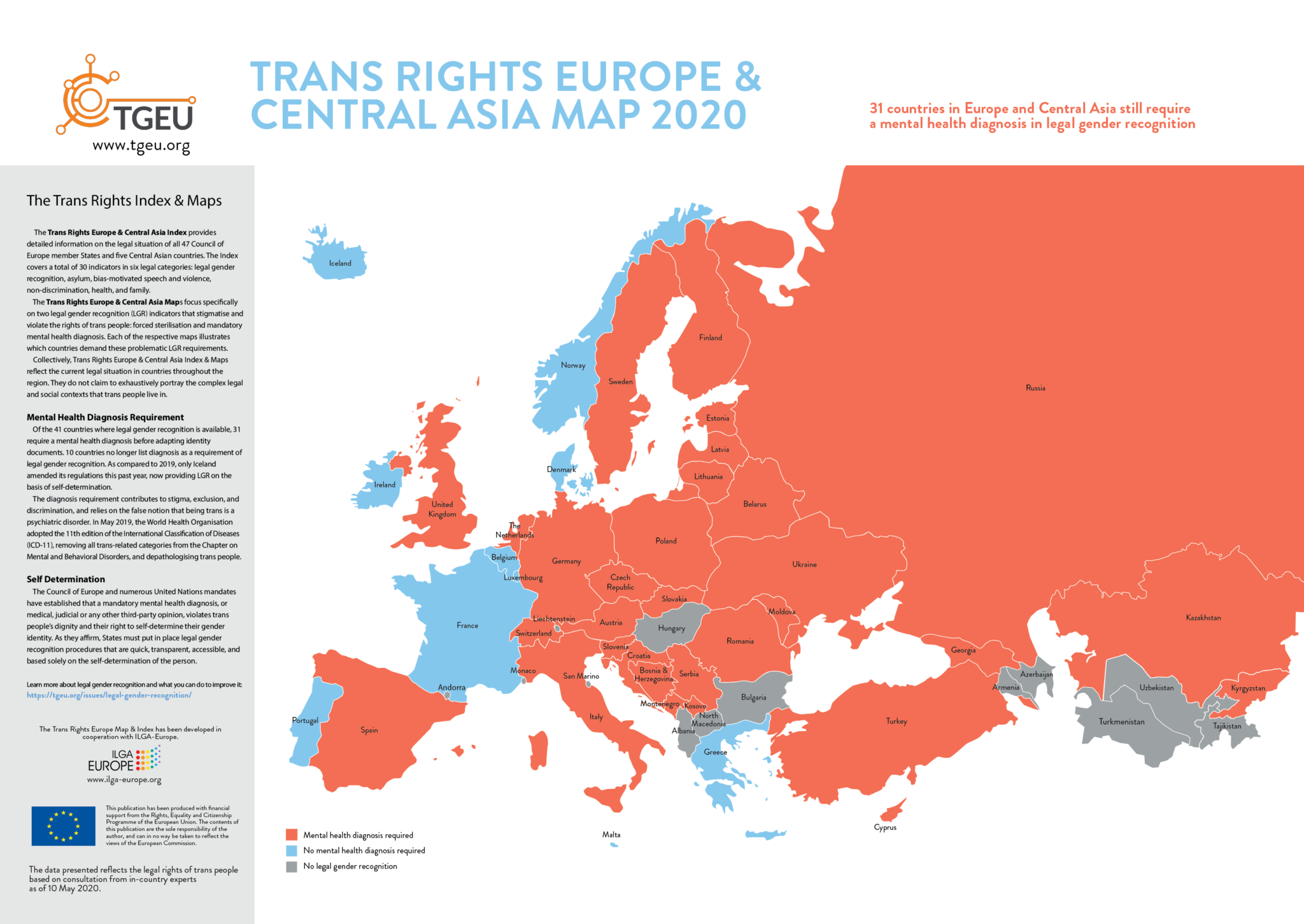
Click the map to enlarge. Map by tgeu.org
According to the data of Transgender Europe (TGEU) for 2019, 22 of the 42 countries in Europe and Central Asia that have legal gender recognition procedures impose a divorce requirement in them. However, TGEU does not distinguish whether such requirements follow directly from legislation or from the actual practice of legal recognition. For example, while in the Czech Republic the requirement to dissolve a marriage in order to obtain gender recognition is written into the relevant law, in Romania the legislation on recognition is generally very vague, yet it follows from the civil code that such a marriage will be declared invalid.
In China, the legislation has no divorce requirement for gender recognition as such, but a precondition for it is surgery, for which, in turn, it is required that the trans person not be married. However, approaches may differ across provinces, and in particular in 2004 there was a case in which a trans woman won compensation through the courts from a clinic that had refused her surgery because she was married. The court’s reasoning was that although same-sex marriage is not lawful, if certain acts are not in themselves prohibited, they cannot be refused, even if their consequences would be unlawful. At the same time, according to another source, the government guidelines of 2009 do not require divorce, but only the partner’s consent to the surgery.

Alessandra Bernaroli with her wife
Italian legislation stipulated that if a person obtaining legal gender recognition was married, such a marriage was automatically dissolved. In 2010, the trans woman Alessandra and her wife needed to have the dissolution of their marriage annulled, since they did not want it.
At first the court ruled in their favor, but later the court of appeal denied them. Subsequently, in 2014, the Constitutional Court held that the state must develop legislation that would regulate the possibility for trans people to remain married, given that same-sex marriage in general is not recognized in the country.
Finally, in 2015 the Supreme Court recognized that trans marriages after legal gender recognition must be considered valid – at least until such a form of relationship is regulated in another way.
In 2016, same-sex partnerships were allowed in Italy, which may be considered one version of such regulation, though with more limited rights compared with marriage.
It is especially interesting to look at those countries where there are neither requirements to dissolve a marriage before legal gender recognition nor an annulment of the marriage after it. That is, the legislation effectively leaves the marriage valid despite the fact that it becomes a same-sex one, which it is not permitted to enter into in that country.
Switzerland
In Switzerland, legal gender recognition has no separate administrative regulation and takes place by court decision. In 1996 a trans woman applied for recognition of her gender without dissolving her marriage. The court found that such a demand corresponded both to the interests of the person herself and to the public interest in protecting marriage, and granted it. In 2007, civil partnerships were allowed in Switzerland, after which it became possible to convert a marriage into a partnership upon legal gender recognition. This, however, is not mandatory, and there is no divorce requirement in the legislation, despite the fact that same-sex marriage still has not been introduced in the country
Estonia and Slovenia
In Estonia and Slovenia, where only limited forms of partnership are available to same-sex couples, the procedures that regulate gender transition in no way mention marriage. However, it has not been possible to find data on specific precedents in which married trans people, going through these procedures, remained married.
Croatia
In Croatia, the regulatory documents that govern transition do not contain a requirement not to be married. However, the decision on gender recognition is taken by the National Health Council, and the criteria by which it is to do so are not established in law. Given that the Constitution and the “Family Act” of this country define marriage exclusively as a union of a man and a woman, it may well be regarded as an obstacle to recognition, but at present there is not enough data to draw conclusions about how this works in practice.
Georgia
Georgia likewise does not impose a requirement to dissolve a marriage on trans people, but this country has no legislation on legal gender recognition at all – the civil code provides only for the possibility of changing one’s name in connection with a “sex change.” So in each specific situation the decision may depend on the subjective views of the officials of the civil registry at the place where the trans person applies. There is currently no data on cases in which the question of preserving a marriage was raised. Note that same-sex unions are not recognized in Georgia in any way
Russia
Especially interesting is the example of Russia, where not only is there no recognition of same-sex couples, but a repressive law against “propaganda of non-traditional sexual relations” is also in force. Nevertheless, the legislation on legal gender recognition there contained no requirements related to marriage, either earlier or since 2018, when the procedure was streamlined by the introduction of a new form of certificate of “sex change.” There is more than one piece of evidence of trans people in Russia obtaining gender recognition while married, and of the marriage remaining valid afterwards. At the same time, however, the marriage certificate and the children’s birth certificates are not reissued, that is, they keep the old data. In general, in the words of one married trans woman, the typical behavior of such people in a transphobic and homophobic country is “don’t ask, don’t tell”
Ukraine
Finally, Ukraine has recently come to belong to this same list of countries.
Until 2016, Order No. 60 of the Ministry of Health, which was the main document regulating the transition procedure, listed among the contraindications for “change (correction) of sex,” in particular, “the patient being married at the time the Commission considers their application.” This literally meant that a married trans person could not in principle obtain from the “Commission on Change (Correction) of Sex” permission to undergo the medical interventions that were a precondition for legal gender recognition.
In 2016, Order No. 60 was repealed, and Order No. 1041, which replaced it, no longer contained such contraindications – nor, indeed, any mention of marriage at all. Thus it became possible to obtain legal gender recognition without dissolving a marriage. At the same time, the Constitution of Ukraine contains the wording that “Marriage is based on the free consent of a woman and a man,” and the Family Code states: “A marriage is a family union of a woman and a man, registered with a state civil status registration body.” At the same time, among the grounds on which a marriage may be declared invalid under the same Family Code, there are none that would cover a change in the legal sex of a person who is married.
To date, at least two cases are known in which transgender people in Ukraine obtained legal recognition, that is, changed their passport and other identity documents, while remaining married. In one of them, the civil registry office refused to replace a trans woman’s marriage certificate, arguing that its current form includes the wordings “husband” and “wife” and does not provide for other options. After that she filed a lawsuit, and at the time of writing the proceedings are still ongoing.
Restrictions in different-sex marriages
So far we have been speaking about the features that arise from the transformation of a legally different-sex marriage into a same-sex one. However, in individual cases nuances arose even with purely different-sex marriages, and they are also worth mentioning
1971. The United Kingdom. Probably the first case in which the lawfulness of marriage for a trans person was considered was a case of 1971 in the United Kingdom, in which a man sought a divorce from his wife – the transgender model April Ashley. After the court did not grant them a divorce simply on the basis of their mutual wish, he decided to approach the matter from another angle and to obtain the dissolution of the marriage on the grounds that, despite her gender recognition, she was allegedly a man. The court, having examined the totality of the biological characteristics of sex, granted his claim. An indirect consequence of the court’s decision was that for a long time the changing of birth certificates for trans and intersex people, which was then done unofficially in the country, was halted.
1999. Texas, USA. In the United States in 1999, a court in Texas declared invalid the marriage of a transgender woman after the death of her husband, holding that from the point of view of sex at birth she too had to be considered a man. She thereby lost her inheritance rights, as well as the right to the lawsuit she had filed in the belief that her husband’s death had been caused by improper medical care. At the same time, in a similar case in California in 1997, the court sided with a transgender man, rejecting his wife’s demand to declare him legally a woman and to dissolve the marriage.
2001. Australia. In 2001, Australia heard the case of Kevin – a trans man who wanted to marry a woman. He was refused on the grounds that he had allegedly been a woman from birth. In the end the judge ruled in Kevin’s favor, recognizing that gender is determined not only by biological properties from birth but also by social and psychological aspects, and therefore, “in the modern sense of the word,” this person is a man. This case became a landmark not only for Australia – it was cited in other countries as well, including in the above-mentioned case of Christine Goodwin.
2002. The United Kingdom. Only in 2002 did the ECtHR issue a ruling in the case of “Christine Goodwin v. the United Kingdom,” in which a trans woman sued the British state because, despite the actual possibility of undergoing gender transition, it provided no mechanisms of legal gender recognition afterwards. One of the key points of the claim was that she could not marry, since legally her gender remained male. The consequence of this case was the introduction in the United Kingdom of the “Gender Recognition Act” in 2004, which at that time became one of the most progressive in the world (although, having barely changed since then, it has already lost that position).
2006. Malta. In Malta in 2006, the trans woman Joanne Cassar wanted to marry a man. Yet despite the fact that she had gone through the entire transition procedure, including surgery and a change of her birth certificate, the couple was refused registration of their marriage. She went to court, and the following year it ruled that they should be allowed to marry, but in 2008, after an appeal, this decision was overturned. The court held that Cassar could not be considered a woman from the point of view of the “Marriage Act,” and that the changes in the birth certificate only secured the right to respect for private life. Later, after a series of court proceedings, when the case had already reached the ECtHR, the government changed its position and reached an agreement with the trans woman, paying compensation and allowing her to marry. Soon afterwards, in 2015, the “Gender Identity, Gender Expression and Sex Characteristics Act” came into force in Malta, removing any restrictions on marriage for trans people.
2008. Hong Kong. In Hong Kong in 2008, a trans woman who had obtained legal gender recognition submitted a request to marry to the Marriage Registry. She was refused, because the recognition procedure in Hong Kong does not provide for changing the birth certificate, and it is precisely that document which is taken into account for entering into marriage. After a series of court proceedings that lasted five years, the plaintiff did eventually obtain permission to marry – the court revisited the definition of “woman” in the context of the marriage provisions, including within it trans women who had undergone surgical correction of the genitals confirmed by a medical certificate. However, this decision did not lead to changes in the legislation on gender recognition
2016. Bolivia. In Bolivia, the “Gender Identity Law” has been in force since 2016, which, however, does not extend its recognition to the sphere of marriage. This effectively means that after legal gender recognition trans people are deprived of the right to enter into marriage. In 2017 the Supreme Electoral Tribunal decided to lift this restriction, but a few months later the Supreme Court reinstated it. In 2018, LGBTQI+ initiatives of Bolivia filed a claim to lift the restriction on marriage with the Inter-American Court of Human Rights, where it is still under consideration.

Marriage for non-binary people
Now that various aspects have been examined in the context of both same-sex and different-sex marriages, let us recall that full marriage equality must be gender-neutral and extend also to people with non-binary identities

A hijra wedding as a trans woman
There are currently about 15 countries in the world in which such identities are recognized in one form or another, but how do things stand there with access to marriage?
Here one can separately name several countries of Asia in which the recognition of genders other than “male” and “female” arose above all out of the need to recognize the genders that have long existed in their traditional culture. These are, in particular, the “hijra” in India, Pakistan, Bangladesh, and the “meti” in Nepal. They can obtain legal recognition as a “third,” “other” gender or similar. At the same time, marriage in these countries is defined as one concluded between a man and a woman. This leads to situations of dual interpretation, when, for example, a person who belongs to the hijra may be perceived in the context of marriage as a woman, and in certain other legal categories as a person of the third gender.
In other countries where there is full or partial recognition of non-binarity, same-sex marriage is also recognized. In Germany and the Netherlands, however, the absence of a gender marker is provided for only on a temporary basis for intersex children, and is not taken into account separately in legislation, including on marriage. In the legislation of such countries as Austria, Argentina, Denmark, Canada, Malta, New Zealand, Uruguay, marriage is defined either simply as “a union of two persons,” or with the qualification “of the same or of different sexes.” Obviously, non-binary people also fall under the notion of “different sexes.”

Fox and Ugla, a wedding of non-binary people, 2017
In Australia and the United States, the laws concerning non-binary people differ from state to state, and recognition is not in force across the whole territory of the country. This should not be an obstacle to entering into marriage as such, but it leads to situations in which non-binary people are forced to position themselves as persons of the female or male gender. And even the existence of laws on legal recognition does not yet guarantee the adaptation to non-binary genders of all official forms related to marriage, let alone of wedding ceremonies, which are often based on certain traditions and the corresponding roles of “husband” and “wife.”
Denmark and Malta, when recognizing non-binary people, simply leave the female or male marker in individual documents, and it is that marker which is taken into account in those spheres where non-binarity is not yet taken into account. In Canada, out of similar considerations, it is allowed to have a binary and a non-binary marker in international passports at the same time, in order to use one of them depending on which country the person is traveling to. This approach can likewise work in the sphere of entering into marriage, although on the whole it should still be regarded rather as a temporary solution.
International organizations on trans families
The positions of international organizations, although they have only the character of recommendations that do not directly affect the domestic policy of countries, can nevertheless, thanks to their authority, prompt change. We therefore quote here the most notable of them, in which the question of trans marriages is clearly voiced
The UN Yogyakarta Principles (2006)
Principle 3: “No status, such as marriage or parenthood, may be invoked as such to prevent the legal recognition of a person’s gender identity”.
Council of Europe Commissioner for Human Rights Thomas Hammarberg
“Human Rights and Gender Identity” (2009), recommendation to the member states of the Council of Europe: “Remove any restrictions on the right of transgender persons to remain in an existing marriage following a recognized change of gender”.
The Committee of Ministers of the Council of Europe
Recommendation CM/Rec(2010)5 on measures to combat discrimination on grounds of sexual orientation or gender identity (2010), para. 22: “Member states should take all necessary measures to ensure that, once gender reassignment has been completed and legally recognized … the right of a transgender person to marry a person of the sex opposite to their reassigned sex is effectively guaranteed”.
The Parliamentary Assembly of the Council of Europe
Resolution 2048 (2015) “Discrimination against transgender people in Europe,” a call to the member states, para. 6.2.3: “remove any restrictions on the right of transgender people to remain in an existing marriage following recognition of their gender; ensure that spouses or children do not lose certain rights”.
The World Professional Association for Transgender Health (WPATH)
“Identity Recognition Statement” (2017): “WPATH maintains that marital status and parental status should not be barriers to the recognition of gender change”.
The UN Independent Expert on protection against discrimination on the grounds of sexual orientation and gender identity
Thematic report “Violence and discrimination based on gender identity” (2018), recommendations: “Remove abusive requirements that are preconditions for a change of name, legal sex or gender, including … requirements related to economic status; health; marital, family and parental status”.
Thus it can be said that among the international organizations that deal with questions of human rights and, in particular, of transgender people, there is already a certain consensus that legal gender recognition and the right to marry for trans people should not stand in the way of each other.
To draw interim conclusions, we can see that approaches to the recognition of trans marriages in the state institutions and courts of different countries differ considerably, both from the point of view of formal legislation and in practice. At the same time, over time there is a tendency toward an expansion of the marital rights of trans people as marriage equality spreads around the world, yet these processes do not always coincide.
Nevertheless, legislative aspects only set the general limits within which trans marriages can exist. Let us now look at the social and psychological aspects, which to a greater extent determine everyday life in such marriages for both transgender people and their partners and, ultimately, what these marriages are and should be for them.
Trans families in the social context
In the last century, ideas about being transgender were largely based on the models of so-called “true / core transsexualism,” which derive from the classification proposed by Harry Benjamin in 1966. These models were exclusively binary from the point of view of both gender and sexuality. According to them, a “true transsexual” could not in principle have any stable relationships before transition – first, because of an aversion to their own body and especially their genitals, which made sexual relations impossible; second, because of an orientation that was heterosexual relative to their gender identity, which it was impossible to realize before bodily changes and obtaining recognition. After transition, such a person was supposed to merge with the cisheteronormative majority and only then build a family, which outwardly would not differ in any way from other “ordinary” families.
This approach seemed to remove the question of marriage from the agenda for trans people, on the assumption that before transition they did not need it, and afterwards it had no particular features that would require separate attention. To a large extent this is what led to its falling into a “blind spot” outside the attention of both researchers and human rights defenders.

A trans girl grew a beard to hide being transgender
The discourse of “trueness” also influenced the ideas of transgender people themselves. In particular, those who did not feel “true enough” to transition tried to suppress transgender manifestations in themselves, reproducing the image of a “real man” or a “real woman.” Sometimes the means of getting rid of being transgender became entering into a relationship, which, especially with the support of relatives, could grow into a family one – with marriage and the subsequent birth of children. Yet it soon became clear that gender identity cannot be changed in this way. Over years of communicating with various trans people, the author of this text has come to know more than one story in which a person led a double life: for the people around them, including their family, they tried to “play normal,” in no way giving away that they were transgender, and only online and during infrequent periods alone could they express themselves in accordance with their identity. If the secret was eventually revealed – in particular because the transgender person did after all decide to begin transitioning – this became a tragedy for the whole family and most often led to its breakup.
Yet already from the section reviewing legislation one can see examples showing that not all families break up during transition. On the contrary, some fought the state for the right to remain a family officially, and sometimes such a struggle lasted years despite defeats at the beginning.
Now, when the model of “trueness” has been abandoned even in such authoritative classifications as the DSM-5 of the American Psychiatric Association (2013) and the ICD-11 of the World Health Organization (2019), it is obvious that it describes only a small part of the transgender spectrum. Modern specialists do not call into question the fact that transgender people can have any sexual orientation and, accordingly, needs regarding relationships and their legalization.
At the same time, we can still divide trans families into two categories – depending on whether they were founded before transition or after its completion. The experience of transition, whether or not it proves fatal for the family, obviously has a significant impact on it in any case. What kind of impact?
Research on trans families
A study by the European Union Agency for Fundamental Rights, conducted in 2012, provides data showing that among the trans people surveyed 15% are in marriages or civil partnerships and 7% are divorced – with the percentages of both married and divorced people being higher among trans women than among trans men. For the United States, the analogous data from another study amount to 12.3% and 19.5% respectively. By way of comparison, slightly more than 55% of the adult population in both the EU and the United States were married in those same years, with 7.4% divorced in the EU and somewhat more than 10% in the United States. Although at first glance the divorce figures for cis and trans people barely differ, if we compare them with the number of married people it becomes obvious that the number of trans people who created a family and preserved it is significantly lower. The figures in themselves, however, do not give an answer as to which factors exactly lead to such a difference.

Marital status by identity, a study by the European Union Agency for Fundamental Rights, 2012
In those studies that go deeper into the problems of trans families, even ones conducted in recent years, it is emphasized in one way or another that this topic still remains poorly studied. Most researchers focus on the medical questions of transition or on theoretical ideas about the social construction of gender identity and, again, of trans transition. Nevertheless, even from the few available works certain tendencies can be seen.
Perhaps the largest study of transgender families to date is “Families in transition: the family context of gender transition,” carried out in 2017 in Belgium as a doctoral dissertation. Through interviews and their subsequent analysis, the author studied the life experience of trans families and their requests for psychological help at medical institutions and support groups, and also reviewed previous research on this topic. Eighteen families with different trans statuses were examined: trans partners, trans parents and trans children. The last two will be discussed in the following sections; here we focus on relationships between trans people and their partners.
If at the beginning of the relationship the partner did not know about the person being transgender, the moment of coming out becomes shocking and may give rise to stress, anger, sadness, a sense of betrayal, loneliness, fear. This often leads to a breakup of the relationship – however, as we have already seen, not always.
The further development of the relationship may be influenced by the following factors:
- If the disclosure of transgender manifestations happens gradually rather than suddenly, all at once, this fosters mutual understanding between the partners. However, if there were certain agreements between them about such manifestations that had been in force for a long time (for example, the possibility of cross-dressing at home, but in such a way that others did not know about it), then the decision to transition may be perceived as a violation of these agreements and a change of the rules in the relationship.
- Partners feel a need to be involved in the processes of transition and of disclosure to relatives and close ones, so their more active role in this helps to strengthen the relationship.
- Partners also need time to adjust to the fact that, as the relationship becomes a transgender one, their own identity (in particular, in the context of sexual orientation) also changes to a certain extent.
- Partners also need time to adjust to the fact that, as the relationship becomes a transgender one, their own identity (in particular, in the context of sexual orientation) also changes to a certain extent.
- The support of family and friends is very important, and in such situations it is often lacking
Trans transition may cause a conflict between the roles that partners play in the relationship. In particular, contradictions are possible between the ally role and the parental role, when the wish to support a loved one in transition comes into conflict with fears about how this process will affect the children. But the greatest test is faced by the romantic role – especially when the partner clearly defines their sexual orientation and preferences, and both the bodily changes of the trans person and the fact that society now perceives their couple as, for example, a same-sex one disrupt that picture. The study proposes three strategies for adapting to role conflicts depending on their depth:
- “close connection,” when despite conflicts there is general mutual understanding and the relationship can be preserved in full;
- “rational separation,” when it is impossible to continue the romantic relationship, but mutual respect and a certain level of support for each other are preserved;
- “emotional rupture,” when the partners continue to keep in touch exclusively on questions of raising the children.
All these roles obviously often have a distinct gender component. Transition within a generally binary system can lead to a partner feeling as though her own gender is being called into question, and trying to emphasize it in some way – for example, through feminine or maternal manifestations.
Families going through trans transition often turn to psychological support. However, the support they receive in health care institutions is largely formal and comes down to the medical aspects of transition, and does little to help the family itself. Informal support groups often turn out to be more useful, but they are not without drawbacks either: for example, sometimes their participants, adopting an expert position, generalize from their own experience and ignore the fact that everyone may have different individual characteristics.
A substantial problem is that as long as stigmatization on the grounds of sexual orientation and gender identity is present in society, its impact extends to the whole family.
For example, some respondents noted that they were comfortable in relationships with trans partners, but uncomfortable when these relationships became visible to a wider circle of people. On the other hand, fears of encountering stigma in many cases turned out to be exaggerated compared with reality. At the same time, some participants – both among partners and among trans people themselves – reproduced views that replicated stigma, for example considering negative reactions to manifestations that reveal transgender status to be normal.
Despite the difficulties, of the 17 couples examined in this part of the study, 11 stayed together after transition and only 6 divorced. Most of them are unions of a trans woman and a cis woman, where the latter had defined themselves as heterosexual from the outset. Most of the families also had children.
5 tips on how to support transgender people and their partners
The same author, together with co-authors, in the chapter on trans families in the book “The Transgender Handbook” mentions the problem of the different speed at which a trans person and their partner perceive the changes. Whereas the trans person, who waited long years before deciding to transition, wants from now on to move faster along this path, the partner, for whom this is entirely new information, on the contrary wants not to hurry and to have enough time to absorb it. The difference between the wish to speed up the process on one side and to slow it down on the other can both sharpen the conflict within the couple and stir up negative reactions among the extended family. The possibility of preserving the relationship depends on the partners’ readiness to negotiate specific steps and the pace along the path of transition.
The British “Good practice guidelines for the assessment and treatment of adults with gender dysphoria” of 2013 raises the question of families in one of the appendices to the guidelines themselves. Here, too, mention is made of the possibility of conflicts and mutual accusations of selfishness, when the trans person wants to speed up the transition while the family, on the contrary, tries to slow it down. A lack of support from the family is recognized as a factor that increases the risk that the person may come to regret undergoing surgery. The guidelines emphasize the importance of supporting and educating families as a whole, which should improve both relationships within the family and adaptation to the new gender role. However, such measures should not become a precondition for access to medical interventions.
In the study “The Other Side of the Metamorphosis”, conducted in 2008 in the United States, the focus was on couples where the relationship was initially defined as lesbian and then one of the partners transitioned as a trans man. Those who defined their sexual orientation as fluid to a certain extent accepted the changes more easily. Nevertheless, the partners distinguished between their status and their identity: while remaining in a relationship with a trans man, they continued to define themselves as lesbians, even consciously making use of the advantages of now being perceived by those around them as a heterosexual couple. For their part, after transition the partners tried to take on the role of the “head of the family,” who earns more and does “men’s” work alongside a “homemaker” wife, which provoked her resistance but ultimately also the need to negotiate the organization of family life anew.
Although everything said above may be perceived as suggesting that preserving a relationship during transition brings mostly problems, this experience has positive sides as well. The Belgian study mentioned above counts among them the development of new strategies of communication, which ultimately lead to an improvement in the well-being of the family as a whole.
Other researchers in the United States, analyzing data from the “National Transgender Discrimination Survey,” concluded in 2017 that trans people, especially trans women, who are married experience less discrimination compared with unmarried ones – including those who are in permanent but unregistered relationships while living together – in such spheres as work, family, health care and public life. As the researchers suggest, this is thanks to the fact that marriage gives greater access to economic, social and psychological resources, and this makes marriage especially important for transgender people, given that they are often limited in these resources.
Thus we return to the question of why trans people may need not only stable relationships that are preserved during transition, but marriage specifically.
Doubts and counterarguments
In 2015 the Open Society Foundations released the publication “License to Be Yourself: Marriage and Forced Divorce.” It sets out a number of typical arguments that opponents of trans marriages resort to in order to call them into question, together with explanations of why these arguments are incorrect. We present some of them here, taking into account the data we have found as well:
Legal gender recognition for married trans people creates “special privileges” where same-sex marriage is not recognized
However, the state is obliged to protect the marriages of trans persons just as it protects any others, and the only decision about whether or not to preserve the marriage should be the decision of the couple itself. The fact that a small number of same-sex marriages arises in this way should not outweigh the need to protect the right to family of people who are already married.
After legal gender recognition the marriage should be considered invalid.
However, other legal relationships and contracts entered into by a person do not lose their force because that person changes their name or gender marker. The same should be the case with marriage, if at the moment it was concluded all the criteria required by law were met.
A trans person, by transitioning, forces their partner into a same-sex marriage
However, if this really is unacceptable, the partner always retains the right to divorce. At the same time, as we have already seen, “same-sexness” often is not felt as an insurmountable obstacle, and then there should likewise be the right to remain in the marriage. So additional regulation by the state is not needed here.
There are not many people who wish to remain married and to transition at the same time, so it is not worth extending the possibilities of legal gender recognition to them.
First, “few” or “many” are subjective assessments that may differ from person to person – moreover, given the generally low visibility of the trans community, it can be asserted with high probability that the real needs in any case exceed the number of cases that become known. Second, in the field of human rights it is in principle incorrect to appeal to the argument of “small numbers” – even if such people existed only hypothetically, their rights would have to be protected. Finally, third, as can be seen from the analysis of legislation, it is often precisely the possibility of legal gender recognition while preserving a marriage that requires no separate regulation, whereas it is the divorce requirement that is introduced by a separate provision.
If the legislation allows civil partnerships to be concluded, then the divorce requirement creates no difficulties.
In reality, almost everywhere the rights of people in partnerships are limited compared with marriage. Most often such limitations concern the sphere of parenthood, so the first to suffer will be couples who have or are planning children. Not to mention that re-registering a marriage or converting it into a partnership forces the spouses to spend additional effort going through these bureaucratic procedures.
Transgender people just need to wait until the state allows same-sex marriage, and then they too will obtain all marital rights.
However, first, as could be seen, this does not always happen automatically – in particular, in Australia and Sweden trans people had to wait some time even after that. Second, the protection of the human rights of one group cannot be made dependent on another.
What trans people say
“You all attach far too much weight to the topic of genitals. My essence has not changed. I am the same person my wife fell in love with. I have changed in an aesthetic sense, but the being she fell in love with has remained unchanged. The overall outcome remains valid, so the relationship can continue”
— Alessandra, Italy
“Like any woman, I consider the best thing in life to be getting married and having a family. And do not drag arguments about children into this… For me, marriage is not only about having children. You marry a man because you love him”
— Joanne, Malta
“It has nothing to do with it. I do not know how doctors connect these things and how other people connect them; for me it is incomprehensible. For me it is not a contraindication [being married and having minor children]. Here one has to take into account what will be more comfortable for the family; it is within the family that the decision should be made, with the help of a psychologist and of people who understand this and can give some legal advice”
— A trans man, Ukraine
“There is nothing on earth that will separate us. We will not dissolve our marriage. We do not call it cis or trans or anything else. It is a religious marriage, as I proved in court”
— Heli, Finland
In the eyes of government officials, gender is far more important than the value of marriage and family
— Ji-Yi, Taiwan
“There are some things I would perhaps change if I could, like, press a button and simply be a woman. I would do it on condition that I would still be with Laura, since I care about her very much and would not want to lose her”
— Galen, USA
Conclusions
- One of the main features of trans marriages is that after legal gender recognition they change from different-sex ones into same-sex ones, or vice versa.
- Historically, most countries required married trans people to divorce in order to obtain gender recognition.
- Leading international organizations take the position that those who want to preserve their marriage after legal gender recognition must have that possibility in any case – in particular, regardless of whether entering into same-sex marriage is allowed in the country.
- People with non-binary identities also need the possibility of entering into marriage, but with full recognition of their gender they currently have it only in a few countries.
- Although many families break up during transition, there are also enough of those who wish to preserve them. The chances of preservation are higher for those families where the partner is actively involved in the transition process and has more support from those around them.
- Society should pay more attention to trans families – in particular, so that they can receive enough of the support that today is usually lacking.
Recommendations for the Ukrainian state:
- Refine the regulatory acts so that married transgender people, after legal gender recognition, can also change their name and gender marker in the marriage certificate.
- Carry out information and awareness-raising work, in particular for civil servants, in order to reduce prejudiced attitudes toward transgender people and their partners in legally same-sex and other non-heteronormative families.
- Conduct a sociological study to determine the situation of transgender families in Ukraine and their needs.
- Consider possibilities for ensuring full marriage equality, including for people who have a non-binary gender identity.
Trans parents
— This text uses the term “parents” rather than gendered words such as “mothers” and “fathers,” since it is to a greater extent gender-neutral
If the topic of trans families in general is simply kept in the shadows, then the topic of trans people’s children, whenever it is raised, is perhaps the most difficult one and provokes the most contradictory reactions in society (in fact, just as the topic of children in same-sex families does).
Perhaps the greatest number of restrictions in the regulations governing matters related to transgender people concern precisely the possibilities of having children in one way or another. These paths themselves may generally be the same as for any other people:
- sexual intercourse followed by conception and the birth of a child;
- assisted reproductive technologies (ART);
- adoption of a child.
Each of them, however, may be regulated by law separately for transgender people – both, on the one hand, as the possibility of having children while holding a transgender status defined in one way or another, and, on the other, as the possibility of obtaining gender recognition while having children or reproductive capacity as such.
In addition, the question of recognizing trans parental status in accordance with gender identity is also subject to regulation. For example, when the person who carried and gave birth to a child is a trans man, whereas it is traditionally assumed that only women can give birth.
Forced sterilization
Historically, transgender transition was associated first and foremost with genital surgeries, which were often equated with “sex change” as such. Such operations, including the removal of the genitals or the partial use of their tissue to construct the organs of the “opposite sex,” automatically meant the sterilization of the person, that is, depriving them of the possibility of having their own genetic children in the future. When, alongside medical procedures, various countries also began to introduce procedures for legal gender recognition, such recognition was usually envisaged as the final stage of transition – and therefore as following surgery. Accordingly, surgical intervention, or even sterilization in so many words, came to be written into the regulations governing the procedure as a precondition.
Within the discourse of “authenticity” discussed in the previous section, it was taken for granted that a trans person is disgusted by the genitals they have from birth and that they therefore would not use them for their intended purpose anyway, including in order to have children. Over time, however, the limitations of these notions became clear, as more and more trans people declared that they felt no need for surgery and sought its abolition as a mandatory requirement for gender recognition. Since then, sterilization in the context of transgender issues has increasingly been spoken of as forced.
Austria
In 2009 in Austria, a trans woman underwent a series of feminizing procedures that she considered sufficient for herself even without genital surgery. In order to obtain legal gender recognition, she went to court. The court decided that since her psychological sense of belonging to the desired sex was irreversible in any case, and her appearance was likewise close to that sex, “heavy” genital surgery was not necessary. As a result, the Constitutional Court ruled that genital surgery must not be a precondition for changing a person’s gender marker in the register of births
Germany
In Germany in 2011, a 62-year-old trans woman went to court after being denied legal gender recognition because she had not undergone genital surgery and had therefore not met the requirements of the “Transsexuals Act.” The Constitutional Court took into account that genital surgery is a very “massive intervention” in a person’s physical integrity, may have side effects and is not necessarily indicated in cases of transsexuality. The court also noted that the infertility requirement is generally legitimate from the standpoint of ensuring that trans men do not give birth and trans women do not conceive children. However, given the small potential number of such “violations,” separate solutions may be found for such cases in order to secure the rights of the children born in them. As a result, the court found that the requirements of mandatory genital surgery and infertility for obtaining legal gender recognition violate the German Constitution.
Sweden
In Sweden in 2012, an administrative court, examining the legitimacy of the sterilization requirement, noted that it had arisen out of the need to “avoid the risk of confusion that may arise in family relations if a trans person has a child of their own.” However, the court gave greater weight to the argument that a person must not be subjected to coercive medical interventions in order to obtain certain rights and that such requirements therefore violate the right to respect for private life. In 2013, the sterilization requirement was removed from Swedish law.
Turkey
In Turkey, trans people were required to already be infertile before undergoing genital surgery. In 2015, a trans man challenged this requirement before the European Court of Human Rights, pointing out in particular its absurdity, since infertility is achieved through surgery in the same way. The Court found the requirement to be a violation of human rights, noting as well the pan-European trend toward abolishing sterilization requirements for legal gender recognition. The case became a landmark one, since the position on the unlawfulness of forced sterilization was proclaimed at the ECtHR level for the first time
Italy
In Italy in 2015, the Supreme Court ruled in favor of a trans woman who had previously been denied legal gender recognition by the local courts because she did not wish to undergo surgery. The court’s decision stated that the scope of medical procedures a trans person resorts to depends on individual circumstances and must be the result of their process of self-determination.
Ukraine
In Ukraine in 2015, two administrative court proceedings took place in which trans people sued the “Commission on the Change (Correction) of Sex,” which required them to undergo surgical interventions that would include the removal of the reproductive organs and mammary glands in trans men and of the testicles and penis in trans women in order to obtain legal gender recognition. The court found that such requirements had no basis in law. These rulings played an important role in changing the regulations on transgender transition in 2016, from which both mandatory surgical intervention and the monopoly central commission were removed.
France
Finally, in 2017 the ECtHR issued a ruling in the joined case of three trans women from France who had spent about 10 years seeking legal gender recognition for themselves because they did not wish to undergo the irreversible surgical interventions demanded of them. In 2016, new legislation was introduced in France in which sterilization was no longer among the requirements for legal gender recognition. Nevertheless, the ECtHR brought the case to a conclusion, finding that requirements for medical interventions that result in a high probability of infertility violate the state’s obligation to guarantee the right to respect for private life. In effect, this means that all Council of Europe member states covered by the jurisdiction of the ECtHR must remove sterilization requirements for legal gender recognition from their legislation
The overall trend does indeed show that the forced sterilization of trans people is gradually becoming a thing of the past: from 2016 to 2019, according to TGEU data, the number of European countries requiring it fell by almost half.
These precedents show how the discourse gradually changed.
Whereas earlier the courts, even when ruling in favor of trans people, found arguments for why the infertility requirement was generally correct, in recent years the courts have already recognized this requirement as such to be unlawful.
At present there are 16 countries with a sterilization requirement in Europe and Central Asia; over the past year alone Serbia has already dropped off that list, and soon, in view of yet another court ruling, at least the Czech Republic should drop off it as well.
At the same time, in Finland a legislative reform that was to remove, among other things, the sterilization requirement failed in 2017. That same year, Amnesty International ran a campaign in support of trans activist Sakris Kupila, who was denied legal gender recognition precisely because he was unwilling to undergo sterilization. The new government elected in 2019 announced that this requirement would be abolished within the following 4 years.

Countries where sterilization is mandatory are marked in red. TGEU map
But Sweden did not stop at abolishing forced sterilization and went even further.
Soon after the change in legislation, trans people who, while the previous law was in force starting in 1972, had been compelled to undergo this procedure against their will filed a lawsuit demanding compensation, led by the organization RFSL. The court granted their claim, and in 2016 the government gave its agreement in principle to paying such compensation for sterilization. After all the details had been agreed and approved by parliament in 2018, about 800 trans people who had been forcibly sterilized applied to receive 225000 Swedish kronor from the state. Clearly, this example may be followed by other countries as well – although achieving the same result elsewhere will be harder than in Sweden, where the government is generally very friendly toward LGBTQI+ people.
As for Ukraine, despite the court victories mentioned above, the situation remains ambiguous.
On the one hand, the “medical certificate on the change (correction) of sex” required for legal recognition refers simply to “medical intervention,” which may be chosen by the patient. On the other hand, the text of the “Unified Clinical Protocol,” which regulates medical procedures in detail, contains contradictory wording, in one instance of which “surgical intervention” is specified as the requirement for obtaining the certificate. In actual present-day practice, doctors usually do not demand surgery if the trans person does not want it, yet this wording still leaves room for such demands, which may include sterilization as well.
International organizations have also repeatedly spoken out against forced sterilization – in particular, those already mentioned in the previous section.
- The UN Yogyakarta Principles (2006), Principle 3: “No one shall be forced to undergo medical procedures, including sex reassignment surgery, sterilisation or hormonal therapy, as a requirement for legal recognition of their gender identity”.
- Council of Europe Commissioner for Human Rights Thomas Hammarberg, “Human Rights and Gender Identity” (2009), recommendation to Council of Europe member states: “Abolish sterilisation and other compulsory medical treatment as a necessary legal requirement to recognise a person’s gender identity in laws regulating the process for name and sex change”.
- The committees of the OHCHR, UN Women, UNAIDS, UNDP, UNFPA, UNICEF and WHO, Joint statement “Eliminating forced, coercive and otherwise involuntary sterilization” (2014): “In line with the positions of international and regional human rights bodies and some constitutional courts, and as reflected in recent legal changes in several countries, sterilization requirements run counter to respect for bodily integrity, self-determination and human dignity, and can cause and perpetuate discrimination against transgender and intersex persons.”
- The Parliamentary Assembly of the Council of Europe, Resolution 2048 (2015) “Discrimination against transgender people in Europe,” call to member states, para. 6.2.2: “abolish sterilisation and other compulsory medical treatment, as well as a mental health diagnosis, as a necessary legal requirement to recognise a person’s gender identity in laws regulating the procedure for changing a name and registered gender”.
- The World Medical Association, “Statement on Transgender People” (2015): “The WMA reaffirms its position that no person, regardless of gender, ethnicity, socioeconomic status, medical condition or disability, should be subjected to forced or coerced permanent sterilization … This also extends to sterilization as a condition for the correction of the recorded sex on official documents following gender reassignment”.
- The World Professional Association for Transgender Health (WPATH), “Identity Recognition Statement” (2017): “WPATH opposes all medical requirements that act as barriers to those wishing to change legal sex or gender markers on documents. These include requirements for diagnosis, counseling or therapy, puberty blockers, hormones, surgery in any form (including that which involves sterilization) and any other requirements for clinical procedures or letters from doctors in any form”.
From this one can see that, first, support for the right to preserve one’s family usually correlates with the position that forced sterilization is inadmissible and, second, that the latter increasingly comes in the context of a general position in favor of abolishing any medical requirements as preconditions for legal gender recognition.
Assisted reproductive technologies and adoption
Assisted reproductive technologies
Under conditions in which transgender people are no longer forced into sterilization, many of them nevertheless resort of their own free will to medical interventions that lead to a loss of fertility.
That loss may be irreversible or reversible under certain conditions – for example, by suspending hormone therapy, which by no means all trans people are prepared to do. If they do not rule out the possibility of having children, then potentially the paths of using ART (provided that they have previously resorted to cryopreservation of their biological material) or adoption remain open to them.
That said, trans people, like cis people, may resort to these paths for other reasons too – not necessarily because of infertility.
Usually the legislation regulating access to ART and adoption has no separate provisions dealing specifically with trans people. In effect, the general provisions apply to them, and if, for example, the law grants such access to different-sex families but not to same-sex ones, then a trans person in a different-sex marriage will have it, and in a same-sex marriage will not. Only in individual cases can trans status indirectly impose additional conditions.
United States
As of the beginning of 2020, 24 US states prohibit discrimination on the grounds of gender identity against those who foster or adopt children. At the same time, although no state has a direct ban on adoption, in practice in many states trans people risk facing excessive scrutiny or refusal because of their trans status. In particular, in 11 states the law allows LGBTQI+ people to be denied family services if providing them creates a conflict with religious beliefs
Bolivia
In Bolivia in 2017, a court ruled that the Gender Recognition Law does not extend, in particular, to the right to adoption, thereby limiting trans people’s access to it. This provision is currently being challenged before the Inter-American Court of Human Rights.
Ukraine
In Ukraine, an order of the Ministry of Health of 2008 established a list of diagnoses in the presence of which adoption is prohibited. This list also includes transgender-related diagnoses in category F64 of the ICD-10. A similar list also exists among the contraindications to the use of ART for people with a female reproductive system – it, however, concerns only infertility treatment in cases where it is covered by the state budget, that is, it does not extend to commercial services in private clinics.
Kazakhstan
Transgender diagnoses are included in the list of illnesses in the presence of which adoption and guardianship are prohibited.
It is worth noting that this subject is still not in the focus even of transgender-specific organizations, so information on it is unsystematized, and it may be assumed that the above list of characteristic examples of legislation is incomplete.
“Taking into account that the best interests of the child should be the primary consideration in decisions regarding the adoption of a child, member states whose national legislation permits single individuals to adopt children should ensure that the law is applied without discrimination based on sexual orientation or gender identity”.
Recommendations of the Committee of Ministers of the Council of Europe CM/Rec 2010(5) on measures to combat discrimination on grounds of sexual orientation or gender identity (2010)
Provisions concerning the specifics of access to ART and its use by trans people are more often found in medical and clinical guidelines – from the global level to the regulations of individual clinics. First of all, the “Standards of Care” of the World Professional Association for Transgender Health (WPATH) should be mentioned here, currently in version 7 of 2011, which medical specialists in at least most Western countries rely on first and foremost in matters related to transgender issues.
The WPATH Standards contain a separate section on “Reproductive Health.” It calls for reproductive matters to be discussed with transgender people before beginning any medical interventions. Moreover, it is desirable to hold such a discussion regardless of whether trans people themselves show an interest in reproduction – since such an interest may appear later, when the capacity for it has already been lost. It is noted that reproductive technologies can be quite expensive. This can in effect become an indirect restriction on access to them, since trans people, facing discrimination, in particular in the sphere of employment, often have a small income, part of which may moreover consist of ongoing expenses on medications. It is also mentioned that at present no method makes it possible to preserve the reproductive material of adolescents who take hormone blockers, because of which their reproductive function does not develop in the first place.
“Transsexual, transgender and gender-nonconforming people should not be denied reproductive options for any reason”, WPATH emphasizes.
The Ethics Committee of the American Society for Reproductive Medicine published its position on transgender people’s access to reproductive services in 2015. It states that the committee sees no ethical basis for restricting people’s access on the grounds of their identity or trans status. At the same time, reproductive options should be offered before the start of transition, and information should be provided about possible medical risks and the insufficient amount of data on the long-term consequences for trans people and their offspring.
The issue of storing gametes is given attention in the appendices to the British guidelines on gender dysphoria of 2013. It must be carried out on the basis of informed consent, which the trans person has the right to withdraw at any moment. If, at the time of expressing the wish to store them, the person is on hormone therapy, it is recommended that it be suspended.
The “Unified Clinical Protocol of Medical Care” of the Ministry of Health of Ukraine, which is largely based on the adapted British guidelines, also contains a section on access to ART and on the rights to parenthood. On the whole it reproduces the WPATH recommendations that reproductive options should be discussed in any case before treatment is begun.
The last recommendation is an interesting one: “Patients with gender dysphoria must not be denied reproductive options. And if reproduction is already impossible as a result of medical intervention – then they must not be denied the adoption of a child either”. Thus, the clinical protocol directly contradicts the already mentioned Ministry of Health orders that establish the corresponding bans.
On the one hand, given that the clinical protocol was put into force later than those orders, it may be considered that it is precisely the protocol that reflects the ministry’s current position. At the same time, in 2017 the Ministry of Health made an attempt to lift the ban on adoption, but did not see it through because of the strong resistance expressed by many church representatives during the public discussion of the draft updated order. With the support of Insight NGO, court proceedings were launched with the aim of proving the unlawfulness of the ban on adoption; they had not been completed at the time of writing.
In 2019, the organization Global Action for Trans Equality (GATE) released a publication titled “Gender Identity and Reproductive Autonomy”, in which much attention is paid to ART issues. In particular, it mentions the supplement to the Yogyakarta Principles, “plus 10,” of 2017, which sets out an additional obligation of states to ensure the right to found a family: “Enable access to fertility preservation methods, such as gamete and tissue preservation, to all persons without discrimination on the basis of sexual orientation, gender identity, gender expression or sex characteristics, including prior to hormone treatment or surgery”.
It also mentions the legislation of Argentina, which in effect corresponds to this principle – it grants full access to ART regardless of marital status, sexual orientation and gender identity, and extends to cases of infertility that are not only medical in nature but also due to social reasons.
Under the latter, the legal parents are defined as those people who have demonstrated “intentional will” in wishing to become parents – regardless of whether they provided their genetic material.
GATE examines 8 different types of cases in which families may resort to ART – of these, 5 cases concern trans people (a trans woman and a cis woman, a trans man and a cis man, a trans woman and a cis man, a trans man and a cis woman, a trans woman and a trans man). In each of these cases the family must be recognized as parents regardless of the way in which their child was born: whether simply as a result of sexual intercourse, or with the help of donor sperm or an egg cell, or using surrogacy.
- The publication also mentions advanced assisted reproductive technologies that are only now being developed
- Mitochondrial replacement techniques, thanks to which, in a couple of two people with a female reproductive system, each can pass on part of their genetic material to the child.
- The method of creating artificial reproductive cells from stem cells is already showing results in obtaining a fetus from “same-sex couples” in mice – and therefore should soon become available for humans as well.
- The uterus transplant method may potentially allow trans women who wish to do so to carry and give birth to children. It is worth mentioning that one of the first attempts at a uterus transplant in history was performed precisely on a trans woman – Lili Elbe, in 1931. At that time, however, the operation proved fatal, and the woman soon died. Only now has humanity come close to repeating this experience with greater success.
Recognition of trans parents
If until now we have considered the question of transgender people’s ability to have children of their own while holding trans status, let us now look at it from the other side: at the possibility of obtaining legal gender recognition for trans people who already have children.
A complete ban on the recognition of trans people who have children is rarely found in national legislation. Practically the only such country today is Japan, where the “Act on Special Cases in Handling Gender Status for Persons with Gender Identity Disorder” has been in force since 2003, and in 2019 its validity was upheld by the Supreme Court. One of the official aims of this law is “preventing confusion in the statuses of parents and children.” In order to achieve it, the law, in particular, imposes the requirement of having no minor children (initially under the age of 20, and since 2018 under 18) in order to obtain legal gender recognition.
In Ukraine, the order of the Ministry of Health that previously regulated the transition procedure included among the contraindications to it “having children under the age of 18,” thereby also limiting access to legal gender recognition. In 2015, following a lawsuit by the civic initiative “T-ema,” a court found this restriction unlawful, but the court of appeal soon overturned that decision. In 2016, with the intervention of Insight NGO, a new procedure was approved, from which this contraindication, along with others, was removed.
It is also worth mentioning that in a number of countries legal gender recognition is not clearly regulated by law, or the law directly provides that the decision on it is taken by a court – as in Italy, Poland, Romania, France and Switzerland. And while in France, say, the court decision is rather a formality, in more conservative countries such as Poland the court may subjectively assess the life circumstances of a trans person, including whether they have children, and use them as grounds for refusal.
But in general, problems more often arise with the recognition of a trans person’s parental status in accordance with their gender – that is, for example, of a trans woman as a mother or of a trans man as a father. For this means acknowledging that a mother can provide sperm in order to conceive a child, and a father can carry and give birth to one.
On the one hand, today one increasingly comes across documents in which parents are listed in a gender-neutral way, without specifying “father” or “mother.” This applies first and foremost to countries where same-sex unions are recognized and where families are therefore legally varied in their gender composition. On the other hand, on a child’s birth certificate the person who gave birth is nevertheless usually still listed as the “mother,” and the need to replace such a certificate may arise precisely in the case of trans families.
At present only a few countries provide recognition at this level:
Malta
In Malta, legislative changes were carried out in 2017 aimed first and foremost at legalizing same-sex marriage. These changes also included bringing the legislation into a gender-neutral format; in particular, the terms “father” and “mother” were replaced throughout with “parent,” thereby removing the parameter of gender from this sphere altogether
Sweden
In Sweden, amendments to the legislation came into force at the beginning of 2019 allowing a trans man to be listed as the “father” and a trans woman as the “mother” in a child’s documents, including changing this information for children born before gender recognition. This law is considered the first in Europe to have explicitly regulated such recognition specifically for trans people
Argentina
In Argentina, the Gender Identity Law provides for comprehensive legal gender recognition. However, the issue of trans parenthood is addressed explicitly only in the province of Buenos Aires, where it is provided that after gender recognition the original record of a child’s birth must be declared invalid and replaced with a new one in which the trans person is registered in accordance with their identity.
Canada
In some Canadian provinces, in particular in Ontario, parents are listed on birth certificates in a gender-neutral way.
The Netherlands
In the Netherlands, trans men who have given birth to children can be listed on birth certificates as fathers. However, this appears to apply only to cases in which they gave birth after having already obtained legal gender recognition.
Sometimes the option of designating a parent in a gender-neutral way formally exists but is unavailable to transgender people. For example, in the United Kingdom such a possibility, under the law of 2008, is in effect available only to the cisgender partners of women who give birth to a child. In general, the person who gives birth is registered as the “mother,” and her husband or the person who provides sperm as the “father.” In 2017, a married couple consisting of a cis woman and a trans woman attempted to register the latter as the child’s gender-neutral parent. The registrar, after lengthy questioning about such private details as “was their marriage defined as same-sex?”, “did the wife identify as a woman or as a man at the moment of the child’s conception?” and “was her sperm actually used for fertilization?”, ultimately gave the answer that she could be designated only as the “father.”
Issue birth certificates for children, upon birth, that reflect the self-defined gender identity of the parents
The Yogyakarta Principles “plus 10” of the UN, 2017
In October 2018, an organization of such standing as the Parliamentary Assembly of the Council of Europe called for the recognition of trans parenthood. In its resolution “Private and family life: achieving equality regardless of sexual orientation,” it calls on Council of Europe member states “to ensure that the gender identity of transgender parents is correctly recorded in their children’s birth certificates and to guarantee that persons using legal gender markers other than male or female are able to obtain recognition of their partnerships and of their relationships with their children without discrimination”. As we can see, the text is also notable for the fact that it mentions the importance of family rights for non-binary people as well.
In the explanatory memorandum to the resolution, rapporteur Jonas Gunnarsson makes an important argument that “the freedom of movement of families with trans parents whose gender is not legally recognized is restricted in practice”. For if they travel with children, they have to present the children’s documents and, accordingly, in the absence of proper recognition, to disclose their trans status.
The question of recognizing the identity of trans parents has also been raised in the courts. The adoption of the above-mentioned law in Sweden was probably influenced by a court ruling of 2015, when a trans man demanded to be recognized as the father of the child he had given birth to, while the Tax Agency continued to designate him as the “biological mother.” The court took into account that legal gender recognition must take effect for all legal purposes, which the current state of affairs contradicted, and that recognition was necessary in order to protect the child’s private life. Thus, by the court’s decision, the trans man was ultimately registered as the child’s father.
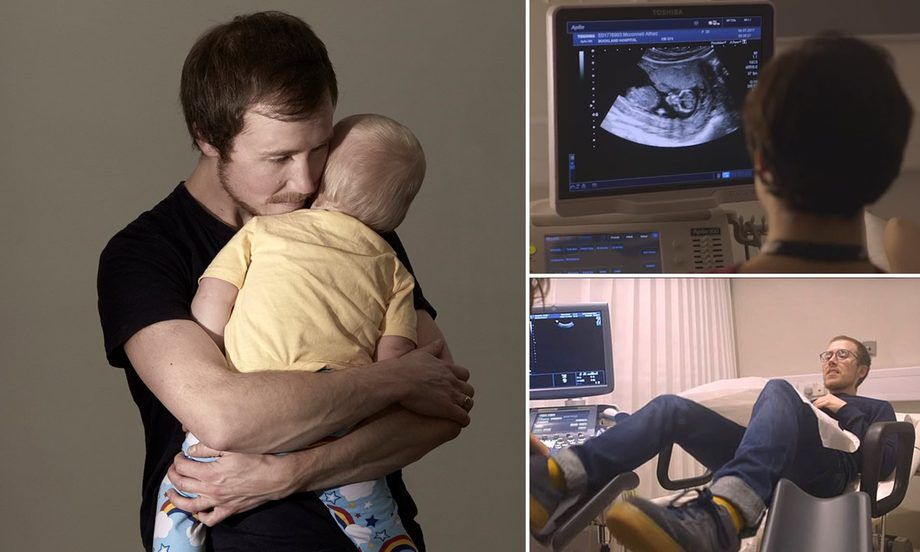
In the fall of 2019, that is, even after the PACE resolution, a court in the United Kingdom ruled in the case of trans man Freddy McConnell that he could not be registered as the father of the child he had given birth to. In the judge’s opinion, motherhood is linked to pregnancy and birth regardless of whether the person is legally a woman or a man. McConnell announced almost immediately that he would appeal this ruling.
In general, it can be said that the topic of recognizing parents’ gender identity has only begun to be actively raised in recent years.
So we can expect that the list of countries in which it is available will soon start to grow rapidly, as is happening with the number of countries in which same-sex unions are recognized.
Parental rights
The ordeals of trans people who want to have and raise children are not exhausted by having them and obtaining proper recognition. Sometimes they face the need to defend their parental rights as such. In particular, this happens in situations after a divorce, when the question is decided of whom the child will stay with and what the other parent’s rights in relation to the child will be
A publication of the American Civil Liberties Union (ACLU) gives examples of court cases in the United States in which such questions were considered.
- In several cases (in the period 1982–2007) the courts restricted a transgender person’s right to custody of their genetic child because of trans status as such, since in their opinion it could cause the child psychological harm. Sometimes they thereby deprived trans people of their parental rights entirely.
- In some cases the courts left trans people (as a rule, trans women) with custody and the right to visit the child on condition that they conceal their own gender identity. Sometimes this in effect meant that the person was forced to give up transitioning.
- There were also cases in which the courts ruled in favor of the trans person. In particular, as early as 1973 in Colorado a court found no confirmation whatsoever that the home environment of a trans father could be dangerous for the child’s physical or emotional well-being. Other courts, however, often based their decisions not so much on actual evidence as on assumptions or even on so-called “common sense.”
- In 2004 in Florida and in 2005 in Illinois, cases were heard concerning adopted children. In them, the former wives of trans men demanded that their marriages be recognized as invalid on the grounds that they were supposedly same-sex and that these men therefore had no right to adopt their children. In both cases the proceedings ended with the trans men being stripped of their paternal status and of the rights associated with it.
- In another case under similar circumstances in the same year of 2004 in Louisiana, the court, although it likewise found the marriage invalid, at the same time decided that the transgender father should nonetheless retain custody rights over the child.
Similar cases have been heard in other countries as well:
- In 2004 in Spain, the former wife of a trans woman obtained a local court order restricting the latter’s contact with the child. In 2008 the Constitutional Court rejected the trans person’s appeal, arguing that the reason for restricting contact was not “transsexualism” as such but the emotional instability associated with transition, which could harm the child. In the end, the ECtHR found no violation of rights in this situation and upheld the national court’s decision, concluding that the restriction in this case corresponded to the best interests of the child.
- In the United Kingdom, a court deprived a trans woman of the possibility of contact with her child, since in its opinion the hostile reactions of the social environment to the woman’s gender identity could harm the child. The Manchester Court of Appeal overturned this decision at the end of 2017, taking into account that the previous court had not considered human rights issues at all. At the same time, it did not issue a final ruling, simply returning the case with its arguments back to the family court. By the time of writing, news had already appeared that the trans woman had withdrawn her claim.
- In 2017 in Russia, the guardianship authorities took two foster children away from the family of a trans man because he had decided to undergo a mastectomy. The particularity of the situation is that at that moment this man had not openly declared his trans status. However, for the Russian court even suspicions about him proved sufficient to see in this situation a conflict between the interests of the children and those of the guardian. Later the trans man left for Spain together with three genetic children, where he began transition. In 2019 he filed a complaint about the actions of the Russian authorities with the ECtHR, and this case is currently under consideration.

Frances with their children
All these cases ultimately lead logically to a question. Whatever the courts’ decisions may be, in their reasoning they appeal one way or another to the “best interests of the child.” But how do a child’s interests actually relate to a parent’s transgender status? Are there any real reasons at all to believe that trans status can somehow harm a child, or is such an assumption nothing more than a transphobic prejudice?
Let us try to answer this question by turning to research material.
Research on trans parenthood
Probably the largest study of this topic to date remains “Transgender Parenting”, carried out in 2014 by the American Williams Institute, which since 2001 has conducted a variety of research on LGBTQI+ topics. It is in fact a meta-study, since it constitutes a review of various studies – 51 in all – which at that time addressed, to one degree or another, questions related to trans parenthood. Almost all of them (except 6) were conducted in the 21st century, which shows an increase in interest in the topic precisely in recent years, whereas earlier it was raised only episodically.
In the review, questions related to trans parenthood are divided into 4 aspects, each of which is examined separately in more detail.
General characteristics of trans parents.
- Various studies give figures from 15% to almost 50% of the total number of transgender people who have children. This is lower than the 70% among the general adult population of the United States, but still a high enough figure not to regard such cases as isolated exceptions, as they would have to be if the model of “true transgenderism” corresponded to reality
- There are substantially more people who have children than there are people who live with children. This is partly explained by the fact that some children are already adults and live on their own, but also by the fact that trans people, as we have already seen from the examples, may be forced to limit their contact with children
- Studies that distinguished gender identity show a higher percentage of parents among trans women compared with trans men and gender-nonconforming people. At the same time, trans women less often live with children.
- People who transitioned at a later age more often have children. This is due to the fact that they usually have children before transition thanks to their own reproductive capacity, which may be lost after transition
The quality of trans parents’ relationships with their children
- Most trans parents have good relationships with their children, and these relationships do not deteriorate during transition. In some cases a family, going through a crisis after a trans person’s coming out, emerged from it even stronger
- Younger children adapt to a transgender transition most easily, while difficulties arise more often with adolescents and adult children
- The greatest stress factors for children are related to tension in the relationship between the parents and to divorce proceedings, rather than to transition as such
Consequences for children who have a trans parent
- None of the studies found any influence of a parent’s trans status on the child’s gender identity or sexual orientation
- Of the several studies that examined the question of discrimination and other negative attitudes toward the children of trans people, only one found a noticeably increased level of bullying at school; the others showed no noticeable difference. At the same time, many trans parents prepared themselves and their families in advance for possible instances of stigmatization and for reactions to them
The needs of trans parents
- Many trans parents expressed a need for social support focused on such matters as childcare, developing parenting skills and family planning.
- Trans people rarely resort to adoption because in doing so they encounter discrimination despite the absence of a formal ban, or simply because of the fear of such discrimination.
- Discrimination also often arises when deciding questions of custody and of the possibility of seeing children after a divorce – both on the part of the courts and on the part of former partners, who try in various ways to make meetings with the children impossible.
It is noted that further research is still needed on many questions. In particular, on the difference between the experience of parenthood for trans people with different identities; on the impact of discrimination on parenthood; on the difference depending on the relationship between the age at which children are had and the age at which transition begins; on the various paths of family formation, given the growing availability of ART. Long-term studies with a more detailed examination of the various consequences of a parent’s trans transition for children are also needed.
But if we summarize the data available today, we can conclude that the main problem for children is not their parents’ trans characteristics, but rather the close social environment that does not accept these characteristics and thereby causes conflicts.
The study “Families in Transition” mentioned in the previous section, conducted in Belgium in 2017, also devotes much attention to the question of trans parenthood.
In the literature review part – which obviously draws to a large extent on the same sources as the Williams Institute study – almost the same conclusions are formulated. It lists the factors that make the process of a parent’s transition easier or, on the contrary, more difficult for children:
- The child’s age: younger children adapt more easily, adolescents have a harder time, since they are more inclined to take everything personally.
- The friendliness of family relationships: the ability to discuss things freely and ask questions improves relationships, while a cisgender parent’s transphobia has a negative effect both on relationships and on the child’s well-being.
- Social stigmatization can make the situation worse.
- If the child’s gender coincides with the sex assigned to the trans parent at birth, this can be a complicating factor.
- How the trans parent themselves generally experiences their transition, as well as the system of values accepted in the family.
- A transmasculine transition may be perceived more easily than a transfeminine one, since in the culture “female androgyny” is usually considered more acceptable than “male femininity.”
In the part of the study conducted directly by the authors, who interviewed both parents and children themselves, the model of “family resilience” is examined, which, if followed, should protect the family from upheavals during transition. It includes four aspects:
- Family continuity. This implies that transition is not something rapid and momentary, but takes place gradually, without abrupt changes. The trans parent’s behavior also does not change instantly, but is rather simply a further development of those manifestations that were present even before transition. An important role is also played by shared family activities in free time, which do not cease because of the transition. All this together helps children feel safer and not experience the transition as the loss of the parent they were used to.
- Communication within the family. The family must have the opportunity to discuss matters related to the trans transition openly and honestly. There must be no situation in which a child receives different information from different parents. Although a certain degree of privacy may be needed, it is worth remembering that keeping silent about certain things can lead to guesswork and give rise to false interpretations. Humor can also help in coping with difficult topics.
- Acceptance by significant others. A child accepts a parent’s transition far more easily when it is supported by those close to them – first and foremost by the other parent. Children may also fear stigmatization from the wider environment, so it is important that parents take their fears seriously, raising topics related to transition at first only within a close circle of friends. At the same time, as practice shows, if children do not perceive the transition as a problem, then in the end others do not consider it one either.
- Attributing meaning. Children usually perceive a person not simply as a parent, but specifically as a father or a mother. So a transition may give rise to thoughts such as: “have I lost my father?”, “is my father now a second mom?” and so on. Sometimes children quickly switch to calling their “former dad” mom, or the other way round, and sometimes they go on using the old words. This may lead to awkward situations, but in any case it is important not to reject the entire previous parental experience. Instead, it is worth finding the most acceptable form of transition from it to the new gender status, reflecting on the situation and sometimes forming in the process one’s own personal sense of “fatherhood” or “motherhood.”
In the end, the respondents of the study who adhered to these points to one degree or another acknowledged that the trans transition had been for them not only a difficult challenge, but had also brought a great deal of positive experience. In particular, they became more open-minded and stopped judging people.
Having children after transition
It can be seen that almost all research focuses on cases in which the child in a trans family was born before transition, and cases in which the child appeared after it are mentioned very rarely. There are objective reasons for this. These include the obstacles to trans people’s exercise of their reproductive rights mentioned in the previous subsections. And the discourse of “authenticity,” which contributes to many trans people disappearing from view altogether after transition, so that the further fate of them and their families is hard to trace. And yet in recent years there have been more and more people who resort to reproduction or adoption during or after transition, and such examples are worth mentioning.

Probably the best known is the case of Thomas Beatie from the United States, which is at the same time the first documented case in which a legally recognized trans man gave birth to a child. He resolved to become pregnant through artificial insemination in 2007, after it became clear that his wife was infertile. Since then he has given birth to three children, and was officially recognized as their father. In 2012 he divorced his wife – which turned out not to be such a simple matter, since in the state of Arizona, where they lived at the time, their marriage was considered same-sex and was not recognized, and so the authorities did not want to process their divorce either, until the court finally did so in 2015.
Thomas Beatie
As a public figure, Beatie became the subject of numerous media publications and television programs, as well as an LGBTQI+ activist, speaking out in particular against the forced sterilization of trans people. In doing so he often faced rejection and ridicule – both from cisgender society and from LGBTQI+ people, including the trans community – because of his failure to conform to gender stereotypes and, once again, to the image of a “real trans man.” Today Beatie and his new wife, with whom he has another child that she gave birth to, live as a happy, loving family – at least, press interviews and photos and videos with the children give no grounds for doubting it.
Another example is Yuval Topper-Erez from Israel, who gave birth to his first child in 2011. In 2013 he and his partner managed to have both of them officially recognized as the child’s biological parents, and they became the first such same-sex couple in the country. In effect, this was done as a kind of exception: at first the Ministry of the Interior was ready to register Yuval only as the “mother,” and only with the direct involvement of the minister and of the head of the relevant Knesset committee was the desired decision obtained. In May 2019, Yuval gave birth to his third child after four pregnancies in all. A year later, for the International Day Against Homophobia, Transphobia and Biphobia, he decided to publish photos of the birth, seeking in this way to normalize the perception of transgender and non-binary parents who give birth to children.

facebook Yuval Topper-Erez
In Ecuador in 2016, a child was born to a couple consisting of two transgender people – trans woman Diane Rodríguez, a well-known activist and politician in the country, and trans man Fernando Machado. During transition they did not have surgery on their genitals and were therefore able to conceive a child in the usual natural way, which Fernando then gave birth to. Soon they began receiving threats, including threats to kill their son, about which they had to turn to the police. It seems that in a country where, despite fairly liberal legislation, transphobic and homophobic attitudes are quite strong, it is precisely this, and not the family’s transgender status as such, that may currently be the biggest problem for the child.
There was also a case in Ukraine in which a trans man gave birth to a child during transition. This was done by trans queer activist Fritz von Klein in 2014. He did not have surgery on his genitals, but since he had by then already been on hormone therapy for some time, he suspended it for the relevant period in order to become pregnant. Although he had previously been monitored at a Ukrainian clinic, the birth itself took place in another country. In the process he repeatedly had to face various manifestations of both transphobia and sexism. It should be noted that at that moment he had not yet obtained legal gender recognition, so on paper he was listed as a “woman,” although at the private clinic he was allowed to register under a male name.
If we now return to the question of whether leaving children with a trans parent violates their best interests, it appears unjustified not only from the standpoint of human rights but also from social and psychological positions. Instead, it makes sense to ask what can be done, and how, to make the stage of trans transition easier for all members of the family, including children – which is what the researchers, among others, tried to answer.
Legal recommendations on protection
For now, the already mentioned ACLU publication “Protecting the Rights of Transgender Parents and Their Children” offers recommendations on how trans people should best act in order to secure a stronger position should they potentially need to defend their parental rights:
- Plan the transition under a doctor’s supervision, since this can ensure both greater acceptance on the part of a partner and more detailed documentation of the transition, which may prove useful for a court if necessary.
- Consult a child development expert on how to make the transgender coming out as easy as possible.
- Where possible, involve the other parent in the coming-out process.
- In the case of adopting a child – formalize it explicitly, rather than relying solely on marriage automatically granting parental rights.
- In the case of using ART – sign a consent form that acknowledges the intentional will to become a parent.
- If adoption is impossible – draw up an agreement on the parental role.
And if the matter has already reached court, where parental rights are called into question, the authors also give advice for parents and their lawyers. In particular, it is recommended:
- to provide testimony from doctors that the transition process improved the trans parent’s mental state;
- to provide testimony from the child development expert who was consulted about coming out to the child;
- to provide testimony about planning the transition together with the other parent in such a way as best to ensure the child’s well-being;
- to provide expert testimony explaining the basic concepts related to transgender issues;
- to provide an explanation that if there is prejudice about transgender issues in the social environment, separating the child from the trans parent will not shield the child from it;
- to provide an explanation that it is by no means only transgender children who suffer from bullying and other negative reactions from those around them;
- if the child already knows that the parent is transgender and at the same time has good relationships with peers, testimony about the child’s actual experience can be provided in order to avoid speculation;
- if the parent is being pressured to conceal their gender identity from the child – to state that concealing an important part of oneself can damage the relationship with the child;
- if the child is young – an expert can provide research data showing that young children adapt better to transition and that it is therefore better not to delay coming out;
- to provide testimony from a doctor that living fully in accordance with one’s gender identity is part of the treatment and that concealing one’s identity can be harmful to mental health;
- to cite the legal framework in support of the fact that the dissolution of a marriage does not affect parental rights;
- to base arguments on the doctrine of estoppel: marital or parental relationships cannot be called into question by a person who took part in creating them;
- to cite precedents in which parents were recognized de facto.
After all that has been said above, one wants to draw attention first and foremost to the very fact that such recommendations are given specifically to transgender people, while cisgender people do not need them. One can find various explanations for this situation, but in any case it demonstrates a fundamental inequality of positions. Whereas cis people enjoy the presumption of innocence, trans people are as if guilty by default simply because they have trans status, and are forced to prove that it is not a problem.
If you are a cisgender person, we suggest the following thought exercise: imagine that you had to resort to a similar set of measures in order to preserve your bond with your child because of your cis status. How would you feel in that case? You can draw your own conclusions.
What trans people say
I don’t know, if I somehow strangely ended up with a child, I would feel bad that by the time they grow up — I’m 22 now, and the child would be, say, 5 — [waiting] until they turn 18… I’ll be an old geezer by then. [Laughs]… Well, it’s like living your whole life waiting for your documents to change, for your life to change… I don’t even know…
— a trans man, Ukraine
In any case, [my son’s] presence supported me in taking this step [starting transition]. Thanks to him I came to understand it better. He comes home from kindergarten and says “dad.” Of course I could also be a mother. I’m already confused as it is, and it’s even more confusing when that little boy already sees me as a dad. Perhaps this became a form of encouragement for me
— Lennert, Belgium
In my last months in Russia I was afraid of any knock at the door. I felt like a person who had survived a violent robbery. People came to my home, breaking the law, using power and psychological pressure, blackmail and threats, and took away children who had lived with me for three years. I know stories of guardians before me refusing my child at the orphanage because she was bedridden, because it was a difficult case. And we managed — and then it all fell apart
— Frances, Russia
I don’t fly abroad, because I worry a great deal that at the end of boarding for the return flight I will no longer be able to prove that I am my child’s father. The possibility of ending up with my child in a situation where it is unclear whether I am allowed to travel with them and whether I will manage to prove my parenthood feels unbearable both to me and to my child
— a trans man, Germany
I have a very stable male gender identity. I see pregnancy as a process, and it does not determine who I am. It is not a male or a female desire to have a child – it is a human desire… I am a person, and I have the right to have my own biological child
— Thomas, USA
We are just like other families. Although we may not have the same rights, we are the same. … We always thought that our way of having children would be adoption, we never believed that we could have our own children. We know that as a transsexual LGBTQI+ family we will be able to give children all the love, the love that their parents could not give them
— Fernando and Diane, Ecuador
Conclusions
- Historically, transgender people were restricted in their right to have children, as a rule by making medical interventions that involved sterilization a precondition for legal gender recognition.
- Today there is a consensus at the international level that forced sterilization is inadmissible, as well as that trans people must have access to reproductive rights.
- Although having children is usually not an obstacle to trans people obtaining legal gender recognition, recognizing them in the correct gender specifically as a child’s parents still remains a problematic issue and is available in full in only a handful of countries.
- Where there are no obstacles in the sphere of parenthood at the legislative level, trans people may still face prejudiced attitudes and discrimination – in particular, when attempting adoption or when defending their rights in court after a divorce.
- At the same time, such prejudices have no basis, since according to research a parent’s trans status affects neither the child’s gender identity nor their well-being in general.
- Society needs more education on transgender issues, since it is precisely negative attitudes and stigma on the part of those around them that create the greatest problems for the families and in particular the children of trans people
Recommendations for the Ukrainian state:
- Update the clinical protocol that regulates the transgender transition procedure so as to remove any provisions that may be interpreted as sterilization requirements.
- Abolish the ban on adoption for transgender people.
- Remove any restrictions on the use of assisted reproductive technologies by transgender people.
- Ensure the possibility of recording parental status in accordance with gender identity on children’s birth certificates and other relevant documents.
- Take measures to ensure impartial treatment on the grounds of trans status when deciding questions of adoption, guardianship and visitation with children.
- Conduct information and awareness-raising activities aimed at acceptance and at reducing the stigmatization of transgender families with children in society
Trans children
While the previous section dealt with families with children in which the parents are transgender, we will now look at the opposite case – when it is the children who manifest transgender identity in one way or another. By children we mean here all minors – usually those under 18, although in some countries the age at which full legal capacity is acquired may differ. This covers both childhood proper and adolescence – before and from the moment of puberty, which affects how a person perceives their own sex and gender characteristics.
In general, children’s needs related to transition, just as those of adults, can be divided into two categories:
- social ones, which include legal gender recognition and social acceptance in the corresponding gender identity;
- medical ones, which include procedures aimed at bringing the body into line with the gender identity
Of course, for children and adolescents all of this has its own specifics, related both to the legal aspects of limited legal capacity – that is, to the fact that children cannot make decisions on their own without adults being involved – and to the physiological aspects of the body and its sex characteristics still being in the process of natural formation and development.
Gender recognition for minors
The discourse of “authenticity” already mentioned more than once defines “true transgender identity” as innate and therefore as something that manifests itself at the earliest possible age – practically from the moment a child becomes self-aware. One would think this should mean encouraging transition to begin as early as possible – all the more so because at that age, as long as secondary sex characteristics have not developed, changing gender expression requires no medical interventions at all, while legal gender recognition is technically a fully reversible procedure. Traditionally, however, access to recognition was granted only to adults.
This seeming paradox can be explained as follows. First, within that discourse legal gender recognition was seen merely as an auxiliary final step following the medical part of transition, which necessarily included surgery, and surgery on children was not permitted. Second, children’s wishes and ideas are often perceived as not serious and short-lived, and therefore any measures that could significantly affect a child’s life were postponed until the child became old enough to bear responsibility for their own decisions.
As the notion of “authenticity” receded and the medical and legal parts of transition gradually came to be separated, various countries began to introduce access to legal gender recognition for minors under one set of conditions or another.
In general, the legislation that regulates this can be classified as follows:
- access to recognition for all minors under explicitly stated conditions;
- access to recognition for particular categories of minors
- the absence of any age limits in the legislation, which indirectly implies that recognition is fully available at any age;
- a restriction by the age of majority, established directly or indirectly.
Among the countries and territories where recognition is available to all minors under explicitly stated conditions are the following
Argentina
In Argentina, under the 2012 “Gender Identity Law”, an application for gender recognition is filed by the child’s legal representatives with the child’s explicitly given consent, after which the application is considered on the same terms as in the case of adults. Court proceedings are also possible if the child wants recognition but their representatives object. In that case the judge’s decision must be based on “the evolving capacities and best interests of the child”
New Zealand
In New Zealand there are effectively two different procedures for changing a birth certificate and a passport, but neither of them has age limits. For children, the application is filed by their parents or guardians
Canada
In Canada, recognition for minors is available only in the province of Alberta, since 2015. It requires parental consent, although emancipated minors who have full legal capacity can obtain it without such consent.
Spain
In Spain, gender recognition without age limits is available only in the region of Andalusia, since 2014, and in Madrid, since 2016, where the procedures are based on self-determination. In the rest of the country an 18-year age limit applies, although children of any age may change their name with the consent of their parents or guardians
Malta
In Malta, under the 2016 amendments to the “Gender Identity, Gender Expression and Sex Characteristics Act”, legal recognition from the age of 16 is available on the same terms as for adults – that is, on the basis of self-determination. At an earlier age recognition is possible by court decision, with the application filed by parents or guardians. The process must give “due weight to the views of the minor” and proceed from the standpoint of “the best interests of the child”.
Luxembourg
In Luxembourg, under the law adopted in 2018, the general recognition procedure is available from the age of 5, but for children the application is filed by a parent or guardian. A child over the age of 12 must explicitly give consent to the change of name and gender marker. For children under 5 recognition is also possible, but it is decided by the relevant district court
Uruguay
In Uruguay, under a law of 2018, gender recognition is fully available to children provided that their parents consent
Australia
In Australia, gender recognition legislation varies from state to state. The law adopted in the state of Tasmania in 2019 gives full access to recognition from the age of 16, while below that age the documents for recognizing a child’s gender may be filed by the parents.
Next we list the countries where recognition is available only to certain groups of minors (for example, upon reaching a certain age). Where no additional clarifications about the general conditions of recognition are given, it is based on the person’s self-determination.
The Netherlands
In the Netherlands the recognition procedure has, since 2014, applied in full to people aged 16 and over. A precondition for access to the procedure is an expert opinion confirming that the person is transgender
Montenegro
In Montenegro, since 2014 the procedure has been available to adolescents from the age of 16 on the same terms as for adults. Recognition is granted on medical grounds after an examination by a number of specialists
Norway
In Norway, since 2016 recognition has been available to children from the age of 6 with the consent of at least one parent. From the age of 16 it is available on the basis of self-determination
Ireland
In Ireland the general recognition procedure, in force since 2015, applies only to those who have turned 18. There is, however, an exception for adolescents aged 16 and over: they may apply to the Circuit Family Court for a court order exempting them from the requirement to be over 18
France
In France, under a law adopted in 2016, recognition through a court decision may also be obtained, in addition to adults, by “emancipated minors” – that is, those who have acquired full legal capacity on a par with adults (for example, when their parents lack legal capacity, or after marrying at an early age). Among minors as a whole, however, this is a fairly small group
Colombia
In Colombia the recognition procedure introduced in 2015 is available only to those over 18, but in 2017 a court made an exception for a trans boy who was only about to turn 18. After that, the court also formulated criteria under which recognition may be granted to minors: the will of the child’s parents, the opinions of specialists (physicians, therapists or social workers), proximity to the age of 18, and the significance of the decision in view of its side effects and the possibility of reversing it
Greece
In Greece, full access to the recognition procedure, which has been in force since 2017 and is based on court proceedings, is available to people over the age of 17 (while the age of majority is 18). Between the ages of 15 and 17 one must first obtain a certificate from a medical council in Athens, which effectively decides whether the adolescent is admitted to the procedure.
Kyrgyzstan
In Kyrgyzstan, under the recognition procedure introduced in 2017, an exception may be made for minors if their official representatives provide a corresponding notarized agreement. In all other cases, being under 18 is a contraindication for the medical part of the procedure that precedes recognition.
Chile
In Chile, where a recognition procedure based on self-determination has been in force since 2018, adolescents aged 14 to 18 can use it only through the family court – either taking part directly or through legal representatives. Children under 14 cannot change their gender marker, but they can obtain a degree of recognition as “transgender”.
Belgium
In Belgium, legislation that came into force in 2018 allows adolescents from the age of 16 to obtain recognition if they have parental consent and a psychological opinion confirming that the decision was made freely. Children from the age of 12 may change their name, but not their sex marker
Portugal
In Portugal the gender recognition procedure, in force since 2018, applies only to adults. For adolescents aged 16 and over, recognition is possible upon the consent of their parents and a psychological opinion stating that the decision was made freely, without any outside pressure

Students of a special Chilean school for transgender children. Photo by Selenna Foundation
In countries such as Austria, Estonia, Germany, the Republic of South Africa, Switzerland and others, legal gender recognition legislation contains no restrictions on the age of the person entitled to use the procedure. In these countries, however, the procedures provide for recognition on the basis of a medical opinion and/or a court decision, which may mean additional complications – since the decision depends on the subjective positions of those who make it, and minors are likely to face closer scrutiny from them.
The legislation of such countries as Belarus, the United Kingdom, Denmark, Ecuador, Finland, Sweden, Japan and a number of others contains a direct restriction on access to legal gender recognition by the age of majority. There are also indirect restrictions, where no age limit appears in the document regulating the procedure itself, yet one arises from other conditions connected with it.
For example, here in Ukraine, under an order of the Ministry of Health, the condition for obtaining the “medical certificate of change (correction) of sex”, which is required for subsequent recognition, is a diagnosis of “Transsexualism” under the 10th revision of the International Classification of Diseases. This diagnosis, however, can be made only from the age of 18; at an earlier age the diagnosis made is “Gender identity disorder of childhood”, which can be reviewed and changed to “Transsexualism” only upon turning 18 and which by itself does not entitle a person to recognition. A similar situation can arise in any country where the precondition for recognition is specifically “Transsexualism” under ICD-10 – in Russia, in particular.
Finally, there are many countries, especially in Asia and Africa, that have no clearly legislated procedures for legal gender recognition. In such cases the decision is usually made by a court, and in theory minors, too, may have access to it. In practice, however, a great deal depends on the subjective views of the particular judge and on the basis they rely on in their decisions.

Kim Petras – a German transgender singer who transitioned as a teenager
Besides gender recognition at a certain age, there is also the option for children of not indicating a gender marker from the very outset, that is, at birth. This potentially allows a child to determine their gender identity more freely, without having to relate it to an assigned sex. At the time of writing, such possibilities exist in only three countries, and even there they are quite limited:
- In the Netherlands a temporary birth certificate may be issued for newborn intersex children, which, however, must be replaced with a permanent one later, once the child’s sex has been definitively determined. That said, the legislation lays down no clear obligation to make such a replacement.
- A similar situation exists in Germany, where since 2013 the birth certificate of intersex children may omit the gender marker, but also on a temporary basis. In 2018 legislation was adopted there allowing the gender marker to be changed to “other” or removed entirely on a permanent basis, but this requires a medical opinion, which means that in practice it likewise applies only to intersex people.
- In Australia, in the already mentioned state of Tasmania, the gender marker on the birth certificate became optional in 2019. A binary sex designation is nevertheless still entered into the register, and there are an additional 120 days to assign it if the genitals do not make it possible to determine sex unambiguously.
In addition, in 2017 there was a separate case in Canada, where a non-binary person, Kori Doty, obtained a health card for their child with the sex marker “U”, which presumably means “undetermined”. The issuance of a birth certificate without a sex designation was refused, however, and Doty is pursuing this through the courts, wanting the child to be able to determine their own gender later on.
Interestingly, in Ukraine the birth certificate form contains no “sex” field. Sex does appear in the medical certificate of birth and in the civil birth record, however, so there is no point in speaking of any possibility of avoiding its indication.
International organizations on transgender children
At the international level, positions on transgender children, their access to legal gender recognition and age barriers in general have also been voiced by various organizations
The UN Yogyakarta Principles (2006)
Principle 24: “…the best interests of the child shall be a primary consideration, and the sexual orientation or gender identity of the child or of any family member or other person shall not be considered incompatible with such best interests”.
Committee of Ministers of the Council of Europe
Recommendation CM/Rec 2010(5) on measures to combat discrimination on grounds of sexual orientation or gender identity (2010), explanatory memorandum: “…member states should take measures to adequately meet the particular needs of transgender students in their school life (for example, to facilitate the change of name or gender in school records)”
Parliamentary Assembly of the Council of Europe
Resolution 2048 (2015) “Discrimination against transgender people in Europe”, a call on member states, para. 6.2.1: “make these procedures [for legal gender recognition] available to all people who need them, regardless of age, medical status, financial situation or police record”.
The UN Committee on the Rights of the Child and others
Joint statement “Embracing diversity and protecting trans and gender diverse children and adolescents” (2017): “Regardless of legal gender markers, trans and gender diverse minors should be allowed to use their own names and pronouns and to dress in accordance with their self-determined gender identity and expression. … States should therefore … provide accessible and non-discriminatory legal gender recognition procedures without abusive preconditions, including for transgender minors”.
UN Independent Expert on protection against discrimination based on sexual orientation and gender identity
Thematic report “Violence and discrimination based on gender identity” (2018), recommendations: “Establish systems for recognizing the gender identity of trans and gender diverse children, taking the best interests of the child as a primary consideration and respecting the child’s right to express their views in accordance with their age and maturity”.
Transgender Europe (TGEU), in its overview “Legal Gender Recognition in Europe”, notes that explicit or implicit age restrictions violate the principle that in all matters concerning children the best interests of the child must come first. As a consequence, such restrictions violate the non-discrimination provisions of several international agreements, such as the Convention on the Rights of the Child, the European Convention on Human Rights, the already mentioned Yogyakarta Principles and so on.
In another paper, “Legal Gender Recognition and the Best Interests of the Child”, TGEU gives the following recommendations on recognition procedures for children:
- the procedures should be quick, transparent and based on self-determination;
- the best interests of the child should be a primary consideration;
- no automatic age barriers;
- no medicalization, that is, no requirements of medical interventions and diagnoses as preconditions for recognition;
- safeguards for the child’s right to identity should be ensured – for example, there should be a separate procedure for cases where parental consent is absent;
- easy name change should be facilitated, as it can be a simpler alternative to the gender recognition procedure.
Medical standards concerning children
As for the medical part of trans transition for children and adolescents, it is governed by the relevant standards and classifications, and sometimes also by the regulations of executive authorities such as the ministry of health.
The foundation of everything here is medical diagnoses, since they set the basic criteria that other standards rely on in one way or another. Globally, such diagnoses are defined primarily by the International Classification of Diseases (ICD), since, being established by the World Health Organization, it applies to all UN member states.
Within the medical community, however, the “Diagnostic and Statistical Manual” (DSM) of the American Psychiatric Association also carries a certain influence.
ICD and DSM diagnoses relating to trans children
- ICD, 10th revision (1990): F64.2 “Gender identity disorder of childhood”, in the category “Mental and behavioral disorders of personality”. It is the diagnosis currently in force in most countries of the world, including Ukraine. It may be made before the onset of puberty or before the age of 18 (in Ukraine, specifically before 18). The diagnostic criteria are written separately for “girls” and “boys” – thus this diagnosis cannot be applied to children with non-binary identities.
- DSM, 5th edition (2013): “Gender dysphoria in children”, in the category “Gender dysphoria”. It is applied directly by mental health professionals in the United States. It may be made at a prepubertal age. Unlike ICD-10, its criteria are binarized to a lesser degree – for example, the wording “another gender” is used instead of “the opposite” one
- ICD, 11th revision (2019): HA61 “Gender incongruence of childhood”, in the category “Conditions related to sexual health”. The classification is to come into force in 2022, but each country organizes the implementation process on its own. Nevertheless, Ukraine can be expected to live by it before long – so it already deserves attention now. As in the DSM, the childhood diagnosis here may be made for prepubertal children
It is worth mentioning that the adoption of ICD-11 was preceded by debates over whether a diagnosis for children was needed at all. The position in favor of abolishing it was taken primarily by transgender activists; in particular, Global Action for Trans Equality (GATE) advocated it consistently from the very start of the ICD reform. They argued that this diagnosis would be of no use whatsoever, since trans children do not need any specific medical interventions before the onset of puberty, while labeling them with a diagnosis may contribute to increased stigma and discrimination against them. Although there is in theory a chance that amendments will be made to the classification by 2022 and that this diagnosis in particular will be removed, at present there are no direct signs of that.

Poster of the 2013 GATE campaign
for the depathologization
of gender diversity
in children
In any case, diagnoses are only the basis for the more detailed conditions of medical interventions, which are set out in clinical guidelines. So let us look at what they recommend with regard to trans children.
Version 7 of the “Standards of Care” of the World Professional Association for Transgender Health (WPATH) devotes a separate section to children and adolescents. It notes, in particular, that gender dysphoria in adolescents is more persistent than in younger children and more often continues into adulthood. It discusses the competencies and roles of mental health professionals working with children and adolescents. It recommends approaching social transition in early childhood with caution, since there is still little data on this topic, and consulting specialists in any case.
Medical interventions are divided into 3 categories
- Fully reversible – hormone blockers that pause puberty, which can resume if the blockers are discontinued.
- Partially reversible – masculinizing (testosterone) and feminizing (estrogen) hormone therapy.
- Irreversible – surgical interventions.
The WPATH Standards recommend the use of sex hormone blockers after the onset of puberty for adolescents who have long displayed signs of gender dysphoria or gender nonconformity. Hormone replacement therapy is permitted with parental consent, in regimens adapted for young people. Surgical interventions for minors are not permitted – an exception may be made for chest surgery in trans boys after a long period on testosterone HRT and of living in the desired gender role.
Since WPATH is widely recognized as the most authoritative organization in matters of transgender medicine, other clinical guidelines often take its standards as their basis, or at least refer to them.
- The clinical guideline of the international Endocrine Society focuses primarily on hormone therapy and generally follows WPATH’s recommendations on the preferential use of blockers, but gives a more detailed rationale for this, drawing on the evidence base. We will return to it in more detail shortly.
- In the United Kingdom the medical services dealing with transgender adults and with transgender children are separate from each other and have their own distinct medical standards. Trans children and adolescents are cared for by the Gender Identity Development Service (GIDS), which is supported by the state and whose foundations and working principles are described in a 2018 publication. In particular, adolescents and their families are always counseled about a possible loss of fertility. Options for preserving reproductive material are offered, and in choosing among them it is worth making sure that they do not lead to severe gender dysphoria. Similarly to WPATH, GIDS recommends the use of blockers to pause puberty, while full hormone therapy is permitted if the adolescent is fully disposed to live in the desired gender. Surgical interventions are likewise possible only upon turning 18. Unlike the WPATH Standards, adolescents with non-binary identities, who may require particular approaches, are also mentioned here.
- In Australia medical interventions for minors are divided into two stages. The first stage involves the use of puberty blockers, which can be started only after puberty itself has begun. The second stage is the use of estrogen or testosterone hormone therapy, usually available from the age of 16. Surgical interventions are available only upon reaching the age of majority. Until quite recently, access to both stages was granted only by decision of the Family Court – even where both the children and the parents fully consented. After a series of court cases involving several families with trans children, the approach was changed so that court permission is required only in the event of disagreement between the children, the parents or the doctors providing care – since 2013 for the first stage and since 2017 for the second. The medical procedures themselves are governed by the Endocrine Society guideline.
- The unified clinical protocol of medical care “Gender Dysphoria” of the Ministry of Health of Ukraine contains a separate section on children and adolescents whose recommendations also follow the approaches of WPATH. On the question of access to medical interventions, however, there is a certain contradiction here: while Ukrainian legislation generally allows people from the age of 14 to choose their doctors and treatment methods on their own, the clinical protocol permits such interventions only with parental consent.
It can be seen that despite minor divergences, current medical approaches are unanimous on the key points:
- any medical interventions for minors may be performed only after the physiological onset of puberty;
- during puberty, preference is given to sex hormone blockers, whose action is considered fully reversible;
- fully irreversible interventions, such as surgery, are not performed before the age of majority.
Points of debate around blockers
Right at the beginning of 2020, court proceedings began in the United Kingdom in which the mother of a transgender child and a former psychiatric nurse at a children’s gender clinic are seeking to have any hormonal interventions for children under the age of 18 declared unlawful. In the opinion of the lawyers supporting them in this case, a minor child is not capable of giving proper consent to medical interventions.
Although the emphasis here was placed on the question of children’s ability to make informed decisions, the use of puberty blockers is a matter of debate in its own right as well.
In the same United Kingdom, for example, there is the Transgender Trend movement, which brings together parents and some researchers who question current approaches to recognizing gender identity and to trans transition for children.
With regard to blockers, they point to the following potential problems:
- the presence of side effects such as bone thinning;
- the absence of sufficient data on long-term consequences;
- the lack of data on whether their use is genuinely reversible;
- possible problems from pausing puberty as such – for example, insufficient development of cognitive functions.
Now it is time to look at what the medical standards that recommend the use of blockers, and scientific research in general, have to say on this matter.
The WPATH Standards mention that the use of blockers may have side effects, in particular on bone growth and height. In addition, pausing the growth of the genitals in trans girls who will later undergo vaginoplasty may mean that the surgery cannot be performed by the penile inversion method because of insufficient tissue. The Standards do not go very deep into the topic, however, simply recommending that any therapy be carried out under the close supervision of a pediatric endocrinologist.
More detailed on the question of side effects is the Endocrine Society guideline. It points to the risk of reduced bone mineral density, which is confirmed by a number of studies; some studies, however, also show that after blocker therapy is stopped, density returns to normal. To compensate for the negative effects, taking calcium and vitamin D is recommended. In individual cases the use of blockers led to elevated blood pressure, which is recommended to be monitored. As for the effect on brain development, the guideline points to a very limited amount of such data, which is currently confirmed in animals but not in humans. Among the side effects it also mentions that the use of blockers with a subsequent switch to sex hormones ultimately leads to a loss of fertility, which must be discussed before therapy begins.
If scientists generally agree that the data on the adverse effects of hormone blockers are currently ambiguous and insufficient, why are they nonetheless recommended? Among the arguments “for”, the same guideline gives the following:
- pausing puberty extends the period during which a child can freely explore gender expressions before making decisions about the irreversible stages of transgender transition;
- going through full puberty while experiencing gender dysphoria can have a very negative effect on psychological state and well-being;
- therapy with blockers, on the contrary, shows improved psychological functioning;
- blocking puberty with a subsequent trans transition gives better results in terms of how well the appearance matches the desired sex than simply beginning transition after puberty is complete.
Transgender children.
A photo project by Sara Julia Wong, published in The New York Times
The endocrinological guideline refers, in particular, to a 2014 study conducted in the Netherlands. It involved 55 trans adolescents who were examined three times: before they started using blockers, at the moment they switched from blockers to hormone replacement therapy, and one year after surgery. Their psychological state and objective and subjective indicators of well-being were studied. The researchers found a partial improvement in psychological state at the intermediate stage, and after the completion of transition their well-being was the same as or even better than that of cisgender adolescents of the same age, and no one regretted having transitioned.
As for the claim that the action of blockers is fully reversible, it is rather theoretical in nature, largely because in most cases adolescents move on to full hormone therapy after using them. Another comprehensive study, also conducted in the Netherlands over the long period of 1972–2015, showed that out of more than 800 adolescents only 1.9% declined to continue using blockers. The same study also found only 0.5% who were dissatisfied with the results of their transition, which is in fact at the edge of statistical significance.
To sum up, the use of blockers is a choice in which one side of the scales holds a highly probable psychological improvement in the near term, and the other holds uncertain potential risks and the loss of the ability to have children of one’s own in the more distant future. But in the end, life – including life in adolescence – is often full of choices that carry an even greater degree of uncertainty, and that is hardly a reason to prohibit them. At the same time, it is no reason to follow the recommendations of even the greatest authorities unthinkingly – ultimately, any choice is worth approaching thoughtfully and with regard to the individual situation.
State regulation in education
The question of children’s gender identity and their opportunity to express it depends not only on the marker in a child’s documents and on their medical diagnosis, but to a large extent also on how society perceives that child in the context of gender: whether it tries to impose rigid gender expectations based on their “assigned sex,” or allows them to develop freely, taking into account their self-determined gender identity or leaving room for such self-determination.
Alongside the family, educational institutions play a key role in this. In them a child not only directly acquires knowledge that shapes their ideas about gender and sex, among other things, but also effectively spends a significant part of their life. Today about half of European countries have a statutory ban on discrimination in education on the grounds of gender identity. Such a general formulation, however, says little about how protection from discrimination is actually implemented in reality. It is therefore worth looking at the more detailed policies and the actual practices that are recommended and put in place in educational institutions.
In Malta, shortly after the pioneering law on legal gender recognition came into force in 2015, policies and procedures for transgender, gender-variant and intersex students in schools were also published. They set out a holistic approach covering teachers, administrators, parents and students in order to improve well-being and provide appropriate conditions for learning. The stated aim of the policies is to create an inclusive and safe environment in schools, free from discrimination, to support human diversity that includes trans and intersex students, and to ensure an atmosphere in schools that is physically, emotionally and intellectually safe for all students.

Excerpt from a report on the impact of the school environment on LGBTQI+ students in Malta
Malta’s policies and procedures for transgender, gender-variant and intersex students in schools include
- A list of international and national legal instruments concerning the rights of children, both in general and specifically in education and in the context of sexual orientation and gender identity
- The main problems faced by trans, gender-variant and intersex students
- The main needs of these students
- A more detailed overview of their circumstances in the context of gender identity, of the need for gender transition, for medical interventions and for the use of correct, non-pathologizing terminology
- Recommendations on how the staff of an educational institution should act if a student needs to transition
As for the transition itself, when a student wishes to begin one, the school is advised to draw up a “transition management plan” that takes into account which period would be best for such changes (school holidays, for example).
It is emphasized that one should not wait for a court to hand down a gender recognition decision, but should follow the student’s own wishes, agreed with their parents, from the moment the recognition procedure has merely been initiated
During a transition, attention is drawn to the following aspects:
- use of the preferred name and of pronouns that match the gender identity;
- the option of switching to clothing that matches the gender identity, within the school dress code;
- protection of privacy, in particular by limiting the number of staff who know about a student’s trans or intersex status;
- access to gendered spaces such as bathrooms and changing rooms in line with the gender identity, or else access to separate spaces if the student feels uncomfortable in shared ones; it is emphasized here that trans or intersex status in itself must not be a reason to send a student to a separate room;
- students must be admitted to physical education classes and sports competitions in accordance with their gender identity;
- all school records on a student must be amended once a court has handed down a decision on legal gender recognition; after recognition, any certificates and diplomas must also be replaced at the student’s request;
- the school must counter any bullying, harassment and discrimination against students on the grounds of their sexual orientation, gender identity, gender expression and sex characteristics.
Malta’s approach is probably the most comprehensive one at the national level.
In other countries the state addresses individual aspects instead:
- In Portugal the law on legal gender recognition, in force since 2018, contains a section titled “Education and training.” It provides that the state must put in place mechanisms to prevent and counter discrimination on the grounds of gender identity, expression and sex characteristics, and mechanisms to address situations in which the well-being of trans students may be at risk. Conditions must be created to eliminate any forms of exclusion and violence in schools and to respect the autonomy, private life and self-determination of students who are undergoing a gender transition. Training must also be provided for the staff of educational institutions, and the school curriculum must be revised to include gender identity issues. Finally, all educational institutions must ensure conditions in which students are duly respected with regard to their gender identity, expression and sex characteristics.
- In 2017, in the Spanish region of Castilla-La Mancha, the regional government presented a protocol on supporting trans minors in education, social services and health care. The protocol provides for the free development of the personality of transgender students; in particular, staff must address them by their chosen name regardless of the one that appears in official documents. Students must be allowed to wear clothing and to use bathrooms and changing rooms in line with their gender identity. The protocol also allows for special measures if a trans child suffers violence in the family or is homeless.
- In the Netherlands a recommendation of the Ministry of Education, Culture and Sport to correctly reflect students’ gender on diplomas has been in force since 2010. Classes that include transgender students receive special guidance, in particular training for teachers. Since 2015 every school has been required to have a social safety plan. Gender diversity is also a mandatory part of the curriculum in the Netherlands, although its content remains the responsibility of individual educational institutions.
- In Sweden future teachers undergo mandatory training on countering discrimination and violence. The National Agency for Education also provides training for teachers already in service, based on a norm-critical approach to LGBTQI+ youth. This approach means questioning prevailing social norms rather than the people who fall outside them.
- According to Council of Europe data for 2017, a number of countries, such as Denmark, Ireland, Iceland, Germany, Norway, Finland, France and Montenegro, include gender identity and gender diversity issues in their core national curricula. In total, 26 European countries have such curricula, but with a greater degree of optionality for educational institutions as to exactly how to fill them with content and implement them.
- According to the same data, in countries such as Belgium, the United Kingdom, Ireland, Germany and Sweden teachers have access to state-supported training on gender identity, among other issues. Such training is also provided in a number of other European countries, 21 in total, but not nationwide or not on a permanent basis.
The experience of individual educational institutions
Besides approaches introduced at the national level, individual educational institutions also sometimes adopt their own policies on transgender students.
The British city of Brighton and Hove has produced a “Trans Inclusion Schools Toolkit”, by 2018 already in its third edition, intended for all educational institutions in the city. It takes a very thorough approach to the topic – starting from basic definitions, covering data on the situation of trans children including personal accounts, legislation, principles for building a comprehensive system to prevent transphobia at school, support for children, adolescents and their families during transition, the specific needs of transgender children and of those who are questioning their own gender, and even offering typical examples of possible situations and of how to respond to them. The aspects the publication touches on are broadly the same as in Malta’s policies mentioned above – use of names and pronouns, school uniform, access to gendered spaces, countering bullying and so on – but they are examined here in even more detail. Advice is also given on the medical side of transition and even on such an area as dealing with the media, where it is important to maintain confidentiality. Although some of the toolkit’s recommendations are tied to specific local realities – the system of student records, for example – in substance most of them are universal and, if desired, could be applied in practically any school

Trans Pride in BrightonPhoto by Sharon Kilgannon
In Sweden gender-neutral approaches are being introduced in individual preschools, in particular at “Egalia,” which has existed since 2010 in a suburb of Stockholm. This preschool’s rules provide for a complete rejection of masculine and feminine personal pronouns; instead, everyone is addressed with the neutral “hen,” or with forms of address such as “friend.” Gendered words such as “boy” and “girl” are likewise not used. The preschool has no books whose characters have rigidly fixed gender roles, and toys are arranged so that both girls and boys can play with any of them. According to the director of the institution, this is meant to give children more choice rather than limit it through social expectations tied to gender.
In Iceland in 2016 one of the elementary schools on the Reykjanes Peninsula introduced a gender-neutral policy in order to create a more inclusive atmosphere. Gender markings were removed from the bathrooms there, and the rules that prescribed gender-specific clothing for swimming lessons were abolished. The aim is to make the school gender-neutral so that children are not forced to choose one of two genders.
Interestingly, this approach contrasts to some extent with the “Hjalli model”, which is now used across a whole network of preschools and elementary schools in Iceland. This model is also aimed at gender neutrality and equality, providing identical uniforms, toys and curricula for girls and boys. However, it also involves dividing children into small single-sex groups in order to compensate, depending on that sex, for the gender expectations they absorb from the outside environment. It is noted, though, that children with non-binary identities may freely choose which groups to join.

Children at a school run on the Hjalli model. Photo from hjallimodel.com/
In Vancouver, Canada, the school board adopted a policy in 2014 that introduced gender-neutral pronouns which may be used for those students, transgender and intersex students in particular, who are uncomfortable being addressed as “he” and “she.” It also provided that students would be able to use whichever bathrooms they wish, regardless of their gender marking.
In Chile’s capital Santiago a special school for transgender children aged 6 to 17 was opened in 2017. The aim was to create an environment in which such children would be free from the discrimination that often causes them to miss classes at ordinary schools and sometimes prevents them from finishing school at all.
Moreover, discussion of “gender ideology,” including issues of sexual orientation and gender identity, is banned in Chile’s public schools. At this school, by contrast, children are treated in accordance with their identity regardless of the gender marker in their documents. As of mid-2019 the school had 28 students, divided into two classes – under and over 12 years of age. The school is private and is supported by its founders, who try to keep the fee for attending the school to a minimum and also seek outside grants, hoping for further expansion
As for the Swedish preschools, a small study was carried out there in 2017.
It showed that children at these institutions pay less attention to the gender of unfamiliar children when deciding whether they are interested in playing with them. They are also less inclined to associate gender with the stereotypes attached to it, although they identify gender by appearance in the same way as other children do. The Norwegian researcher Nina Rossholt believes, however, that preschools actually have little effect, since outside them children still interact with a thoroughly gendered society.
The situation in the United States deserves separate attention. There, the general “Title IX” applies – an amendment to the law that prohibits sex discrimination in education. Under the presidency of Barack Obama, in 2016 the Department of Justice together with the Department of Education prepared guidance that extended this amendment to gender identity and explained that the treatment of transgender students must be based precisely on their identity. In particular, they must be addressed by their preferred names and pronouns, they must be allowed to take part in activities that involve division by sex and to access gender-marked facilities in line with their gender identity, and their trans status must not be disclosed without their consent.
On the one hand the initiative had broad support, and on the other it provoked resistance from conservatives, including attempts to limit its effect or to have it struck down in court in individual states, as for example in Texas. In 2017, after Donald Trump and the Republican Party came to power, the guidance was withdrawn, and the administration allowed states to set policy on trans students at their own discretion.
What did remain as a legacy is the publication “Examples of Policies and Emerging Practices for Supporting Transgender Students,” which collects such examples from educational institutions in various U.S. states along with links to the documents that govern them. The examples are grouped by topics such as students’ gender transition, confidentiality and school records, sex-segregated activities and facilities, practices for supporting transgender students, and the use of terminology. Even without being binding, this material can be used as a set of models to draw on in building a trans-inclusive school environment.
Objects or subjects?
If the case of “Title IX” is probably the largest-scale example of resistance to transgender children’s freedom of self-determination as such, followed by a rollback at the political level, in other situations the confrontations concerned individual trans children and took place at the level of the courts.
One of the best known is the case of Gavin Grimm, again in the United States. In 2015, while attending school in the state of Virginia, he came out as a transgender boy and began using the men’s bathrooms.

In response, the school issued an order that students must use bathrooms and changing rooms in accordance with their “biological sex.” School administrators also directed insults and improper remarks at Grimm. With legal support from the American Civil Liberties Union, he took the case to court. The judge, however, ruled against him, arguing that protection from discrimination covers only sex and not gender identity, and called being transgender a “mental disorder.” Then came an appeal and a series of hearings at various levels, after which, only in 2019, a district judge for the Eastern District of Virginia ruled in Grimm’s favor. The school’s policy was found to be discriminatory, and the school was made to reimburse all legal costs and to recognize the boy’s gender identity in all documents.
At a school in the state of Pennsylvania in 2016 there was a case in which cisgender students filed suit against a school policy that allegedly violated their rights by allowing trans students to use bathrooms in line with their gender identity. Courts at various levels, up to the Supreme Court, rejected their claim and found the school’s policy constitutional.
In Argentina, where the “Gender Identity Law” has been in force since 2012 and where minors, among others, have repeatedly obtained recognition under it, in 2018 the civil registry of Buenos Aires unexpectedly refused recognition to a trans girl and two trans boys. The decision stated that an interdisciplinary body first had to be set up to determine whether the children were mature enough to give proper consent. The ombudsman’s office appealed this decision, demanding a detailed justification for the refusal. According to lawyers, the legislation does not provide for any conditions requiring interdisciplinary bodies to intervene in the recognition process, so such a decision looks entirely unfounded.
In Germany the “Transsexual Law” initially set an age limit of 25. In 1982 a court ruling was handed down in the case of a 21-year-old trans woman concerning the limit on legal gender recognition, and in 1993 in the cases of three trans people aged 22-24 concerning the same limit on changing one’s name. In both instances the court found the age limits unjustified and struck them down. At first glance this does not directly concern minors. What is important, however, is that in lifting these limits the court did not set any others, thereby making the procedure available to children as well.
Also in Germany, at the end of 2017 the Constitutional Court handed down a ruling in a case concerning custody of a trans girl. While the child’s mother supported her identity as a girl, her father did not accept it, forbade her to wear girls’ clothing and insisted that she cut her hair. The local court initially granted the father sole custody. The mother appealed this decision, and the Constitutional Court ultimately overturned it, finding that the best interests of the child and her well-being had not been taken into account in it.
A similar situation occurred in the state of Texas, USA. Here, too, the parents held different views on the transgender identity of their child, who had identified as a girl from the age of 3 and at 5 received a diagnosis of “gender identity disorder.” The father decided that indulging a child’s transgender identity was child abuse and sued the mother. At first the court likewise sided with the father, but then a judge overturned that decision and granted the parents joint custody, which also involves making joint decisions on medical and psychiatric procedures for the child. The situation gave rise to debates, including in political circles, in which conservatives argued that a child of that age cannot make a genuine choice about gender identity, and that therefore, instead of supporting such wishes, one should wait until they come of age, when they will really be able to decide for themselves.

Jazz with her family
The theme that the child is not capable of making decisions but is merely an object whose fate must be decided by adults runs, in one way or another, like a red thread through all the cases mentioned above, even where this question was not raised directly. There are, however, stories in which a trans child acted as a subject who not only shapes their own destiny but also changes society, with their loved ones supporting them in this.
This can be seen, in particular, in the case of Jazz Jennings – probably the world’s best-known trans child, and now already a grown young woman – who was born in the United States in 2000. She had her family’s support from the very beginning: at 5 she was diagnosed with “gender dysphoria,” and she soon began her transition. And from the age of 6 she effectively became a public figure, regularly appearing on television with accounts of her transgender experience, and since 2015 she has been filming, together with her family, the series “I Am Jazz” about her life and her transition. In 2007, together with her parents, they founded the TransKids Purple Rainbow Foundation, whose mission states, among other things, that “it is society that must change, not the children,” and that families should support their children and help them grow up free from gender roles. Jazz’s case shows how a trans child can not only make a successful transition but also become an example, a role model who inspires others and helps them.
Another story in which a trans child became a driver of social change is that of Willa Naylor from Malta.
From early childhood she felt herself to be a girl, and her parents resisted this at first, but soon understood and supported her. Under the legislation of the time, however, Willa had to attend school as a boy. Feeling severe discomfort because of this, she avoided contact with other children there, so much so that doctors even suspected she had selective mutism. Her parents tried to persuade the school administration to let her attend as a girl, but they pointed to government policy, which they could not violate. In the end the parents got as far as the minister, who promised changes. Thus the campaign launched by Willa and her parents became one of the factors behind the change in the legislation on legal gender recognition and in the policies on transgender children in schools already mentioned earlier. Later she became the author of the book “Truly Willa,” devoted to her story, so that other people could better understand what it is like to be a trans child.
▶ Watch a related video on YouTube
Still, there are always those who see in such stories not agency but merely a desire on the part of parents to profit from their children’s particularities and to support the “ideology of transgenderism.” In any case, as the joint publication of TGEU and Humboldt University, “Back Me Up!”, reminds us, the UN Convention on the Rights of the Child includes the child’s right to be heard: “States Parties shall assure to the child who is capable of forming his or her own views the right to express those views freely in all matters affecting the child, the views of the child being given due weight in accordance with the age and maturity of the child”.
Social research on trans children
In the previous section we already raised the question of the “best interests of the child” from the point of view of how a parent’s transgender identity affects them. Now let us look at the same question in a different situation – when the manifestations of what may be a transgender identity are found in the child.
For this we will again turn to research data
In 2019 the results were published of a large study, “Similarity in transgender and cisgender children’s gender development,” conducted in the United States among transgender children. It involved 317 children aged 3 to 12 from almost every state in the country who by the time of the study had already made a social transition, that is, had for some time been living in accordance with their gender identity. The aim was to compare the features of their identity and behavior with cisgender children, and two separate groups were used for comparison: their siblings, and simply a control group of cis children.
The main results were as follows:
Main results of the study “Similarity in transgender and cisgender children’s gender development,” 2019
- transgender children clearly identify with their current gender, which differs from the one assigned to them at birth, and display the preferences and behavior typical of it;
- their gender identity and preferences do not on the whole differ from those of cisgender children;
- the features of gender-related development also turned out to be similar for cis and trans children;
- there is almost no difference in children’s gender expression depending on how much time has passed since their transition.
As for the last point, the only slight difference was that children who had transitioned recently tended to choose more stereotypical clothing in line with their gender identity. Overall, however, there was no substantial difference between children of, say, 10 years of age whose transition had taken place a year or five years ago. The authors of the study believe this does not mean that gender socialization has no effect. In their view, it rather means that at an early age, when children begin to absorb the difference between genders and their features, trans children seek to be socialized in accordance with the traits characteristic of a gender other than the one assigned to them. This can be regarded as a “nail in the coffin” of the “nurture theory” popular in the last century, according to which a child’s gender identity is formed depending on the gender role in which the child is raised. In academic circles this theory, at least in such a “head-on” approach, has long since ceased to be taken seriously, yet conservatives still keep clinging to it.
It is also interesting that the spread children displayed within a single group – that is, a greater or lesser tendency toward stereotypical femininity or masculinity – appeared in the same way among transgender and cisgender children.
The researchers also point to certain limitations of their work. In particular, in all the participating families the parents accepted the identity of their trans children, so the question remains of how a less supportive family environment might affect its formation. All these families also belong to a Western culture of educated people living in comfort, so what the picture would be across a broader socioeconomic range is likewise an open question.
In any case, one conclusion can be drawn from the study: when a transgender child is provided with conditions in which they develop in accordance with their gender identity, then apart from the very fact of their trans status they will not differ noticeably in any way from cisgender children.
Even taking all the limitations into account, these results run strongly counter to the prevailing view that transgender manifestations are usually just a stage of development that children later “grow out of.” Moreover, this view is supposedly confirmed by several studies that focused on children in whom specialists initially identified “gender dysphoria,” but who subsequently gave up on transitioning. They put the number of such children at between 60% and 95%.
In recent years, however, these studies have been criticized. Above all because in the past the identification of a transgender identity was based not so much on features of gender identity as on gender-nonconforming behavior, such as cross-dressing. Thus, under more modern approaches, many of the “desisters” would not have been classified as transgender in the first place. In addition, researchers counted as desistance those cases in which children simply did not return to the clinic they had first approached – it is obvious that this alone does not yet indicate an intention to abandon the transition and return to identifying with the assigned sex.
Finally, it is noted that today’s reality offers a wide range of gender identities besides the traditional “female” and “male.” Under such conditions, a classification into exactly two options – continuing or stopping the transition – also turns into a false dichotomy, since more and more trans children (one third according to a 2015 survey in the United States) define themselves as non-binary. They may at the same time want other transition options, with which gender clinics, which usually have experience of working only with trans boys and trans girls, are far from always able to help them.

Gender nonconformity is not necessarily a transgender identity
Another study, “Mental Health of Transgender Children Who Are Supported in Their Identities,” from 2016, also conducted in the United States, examined the mental health of transgender children and how support in the family affects it. It involved 73 children aged 3–12, who were likewise compared with their siblings and with a control group of cis children.
Levels of depression and anxiety in the children were examined. The results showed that for depression these do not differ from the general population, while for anxiety the levels are somewhat higher, though only slightly. The researchers explain this increase by the fact that, however wonderful relations in the family may be, a child also spends some time in another social environment – at school, for example, where they may encounter manifestations of stigma and microaggression on the grounds of a transgender identity. And if they do not disclose their trans status, they may still feel anxiety that it will somehow become known – for instance, because their body differs from that of other children of the same gender.
The authors compare their results with data from other studies conducted among transgender children, in particular in the Netherlands and Canada, in which the factor of acceptance was not examined separately. In those studies the level of mental health problems in children, such as depression and anxiety, was high – in one of the studies 36% of cases fell within the clinical range on this measure.
The Belgian doctoral dissertation of 2017 “Families in Transition”, already mentioned in previous sections, also addresses the issue of families with trans children, but more from the side of these children’s parents. It notes that they often feel responsible for the situation and guilty at the same time, and that this is reinforced by social condemnation and stigma. They feel afraid of being bad parents in the eyes of the people around them because they support their child’s gender nonconformity instead of adapting the child to social gender norms. Conflicts within families are a frequent situation. Mothers are more often accepting, on the basis of unconditional love, while fathers are more inclined to be concerned with questions of safety. In general, parents often lack both professional support and the opportunity to talk with other families in similar situations, so as to be better able to cope with them.
While the studies mentioned above focused specifically on the transition process and its effect on the child, let us now look at the social position of trans children in their everyday lives.
One such study, from 2018, “Health and Well-Being of Cisgender, Transgender and Non-Binary Youth,” was conducted in Spain – it covered, admittedly, not only minors but a broader range of transgender and non-binary young people aged 14 to 25. Its results showed that transgender adolescents are more often subjected than cisgender ones to verbal attacks both at school and outside it, as well as to physical attacks at school. Non-binary young people also more often become victims of cyberbullying. In addition, the study examined cases of discrimination at work – although this concerns older young people, we note that in this area the figures for transgender people are especially worse than for cisgender people.
The researchers also examined the factors that foster support. It turned out that non-binary adolescents take part the least in extracurricular activities – even within the LGBTQI+ community – and also receive less support from family and friends.
All this has such consequences as feelings of isolation and suicidal thoughts – almost twice as often as among cisgender youth – and fewer moments of feeling happy.
It is noted, though, that the participants in this study were reached through LGBTQI+ organizations, which may affect the results – for people who have no access to the community they might be even worse.

Transgender “Miss Universe” Angela Ponce of Spain speaks out for transgender children and against violence toward them
In the previously mentioned study by the European Union Agency for Fundamental Rights, conducted in 2012 in EU countries, the survey was carried out among adult trans people, but they were also asked about their school experience before the age of 18. The following data were obtained:
- 78% did not disclose their trans status at school, with trans girls and gender-variant children being the least open;
- 35% assess the school atmosphere as generally negative toward LGBTQI+ people, 24% as positive, and the rest as somewhat mixed. The worst figures are in countries such as Greece, Portugal, Italy, the United Kingdom and Croatia, and the best in Latvia, Denmark and Czechia;
- 38% received negative comments at school, most of all trans boys and queer people (the latter being at the same time the most open group).
It is worth noting that, given the methodology of this part of the study, these data refer to a past period ranging from 10 years to decades ago, so today they might be different.
The 2015 “United States Transgender Survey”, which covered more than 27000 transgender people, reports the following data on their school experience:
- 54% were verbally abused;
- 52% were not allowed to dress in accordance with their gender identity;
- 24% were physically attacked;
- 17% left school because of the way they were treated, and 6% were expelled from school;
- 13% reported sexual harassment;
- 77% overall had one or another negative experience because of their trans status.
Finally, in 2017 the organization Human Rights Campaign (HRC) with the support of the University of Connecticut conducted a survey among LGBTQI+ adolescents that included 5600 transgender and gender-nonconforming individuals. The data on them were published in a separate “Gender-Expansive Youth Report.” Among the main results obtained, the researchers cite the following:
- 23% of respondents feel that they can fully be themselves at home, and 22% at school;
- 72% have heard their parents speak negatively about LGBTQI+ people;
- 85% constantly experience high levels of stress;
- 69% have had unwanted sexual remarks or gestures directed at them;
- 16% (twice as many as their cisgender peers) have been victims of sexual violence;
- 16% feel safe at school;
- 84% have received verbal threats because of being LGBTQI+, and 42% physical ones;
- 51% do not use bathrooms at school that match their gender identity, because they doubt they have the right to or do not feel it is safe;
- 22% have come out about their gender identity to their parents, 10% to teachers and school staff, and 13% to classmates.
So what, in the end, creates more problems for children – their gender nonconformity as such, or the way the people around them relate to it? If we keep the earlier data in mind and look at these figures, the answer seems obvious.
From all the data presented, at least one simple conclusion follows:
trans children have the fewest problems when they receive the most support. So when it comes to the “best interests of the child,” it is worth taking into account that achieving them is not limited to answering the question of what to do with the child and their trans characteristics, but also requires work with the social environment in which that child lives.
What trans children say
“Bullying is already a huge problem for young people in middle school, and especially for transgender youth. Hearing adults from my own community treat me as if I were a creature meant for their mockery and their staring, or some kind of freak on a stage – it was incredibly dehumanizing, to a degree I cannot even convey”
— Gavin, USA
“I hope they [the viewers] will understand the importance of unconditional love. That has always been the main message my family carried. You simply have to love and value all people for who they are, including our differences. We are all beautiful and unique, and we just have to learn to accept that”
— Jazz, USA
“The biggest problem I really had was the bathrooms. I definitely did not want to use the girls’ bathrooms, and I was uncomfortable using the boys’ ones when most people there knew that I was trans. I was given permission to use either of the two accessible bathrooms, but staff and students often questioned me when they noticed me coming out of them, and that further illustrated the feeling that I should not be using them, since I am not disabled”
— a trans boy, United Kingdom
“The doctor keeps asking whether I am satisfied with my body. If you are asked many times, you can start to think that you are not”
— David, Belgium
“I was always a girl. … Everyone told me: “No. Get in line with the boys”. I did not listen”
— Luana, Argentina
“All we are asking for is a little respect. The respect not to misgender me. The respect not to treat my sexuality as an occasion for intrusive questions. There is not enough respect in the world in general, but I think that focusing on these things would be a good start”
— Jamie, Ireland
Conclusions
- The possibility of legal gender recognition for minors is still more the exception than the rule, but in recent years the number of countries where it is available has been growing, as has support for this at the international level.
- Medical standards for minors usually provide that no medical interventions are performed before the onset of puberty, and that after it puberty blockers may be used, followed by a move to hormone replacement therapy if the transgender identity is persistent.
- Hormonal medical interventions in adolescence are an area that requires further research, in particular long-term research, yet the effect of such interventions in improving psychological well-being is sufficiently well proven.
- The absence of gender recognition by the state does not in itself rule out the introduction of trans-inclusive policies in educational institutions that help children be socialized in accordance with their gender identity.
- The presence of support, above all in the family, improves the psychological state and the overall well-being of trans children, and with such support their development does not differ from the development of cis children. When there is no support and there are instead insults, attacks or the forced concealment of one’s own identity, this worsens their condition and gives rise to suicidal feelings.
- In any case, when putting the “best interests of the child” first, it is worth remembering to take into account the views and feelings of the child themselves.
Recommendations for the Ukrainian state:
- Improve the legal gender recognition procedure so that it is available to minors under explicitly specified conditions.
- Consider the possibility of not recording a child’s sex in documents at birth if the parents so wish.
- Prohibit discrimination on the grounds of gender identity in education.
- Develop recommendations for educational institutions on treating transgender students in accordance with their gender identity, and on including gender identity issues in curricula.
- Include the issue of transgender identity in the training programs for medical specialists who work with children and adolescents.
Afterword
See more of our online projects:
- “Family Stories” — what Ukrainian trans families, lesbian families and other families that seem “unusual” at first glance have to say
- “Transgender Identity in Traditional Ukrainian Culture” — whether transgender identity is reflected in ancient myths and Ukrainian folklore